
By Cherlotte WEbster-
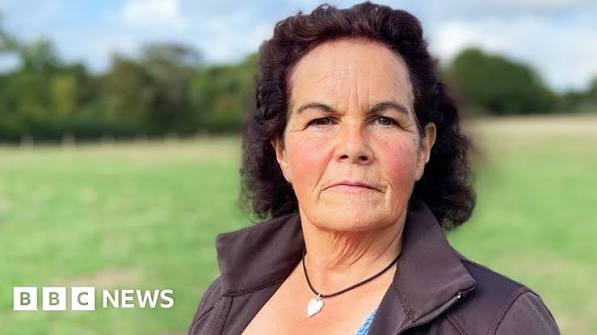
Linda Williams, who was raped by the disgraced former police officer in 2004, says her own force left her feeling “controlled, abused and powerless” during a lengthy legal battle that ended in a six-figure settlement without an admission of liability.
A police officer who was raped by one of Britain’s most prolific sex offenders has delivered a damning verdict on the Metropolitan Police, declaring that she would not report a rape to the force today and demanding that its commissioner, Sir Mark Rowley, resign.

AD: Capeesh Restaurant
Linda Williams, 60, was attacked in 2004 by David Carrick, a former Met armed officer who went on to become one of the most notorious sex offenders in British criminal history. More than two decades after the assault, Williams says the trauma has never left her, and that the treatment she received from the organisation she served compounded the damage rather than helping her recover.
Her civil claim against the Metropolitan Police has now been settled for an undisclosed six-figure sum, bringing a lengthy and deeply distressing legal dispute to a close. The force has not admitted liability, but the settlement has done little to soften Williams’s criticism of an institution she believes has failed to confront the culture that allowed her ordeal to become possible.

AD: Oysterian Sea Food Restaurant And Bar
Her words cut to the heart of the crisis facing the Met: a former sexual offences officer, someone who once helped victims navigate the criminal justice system, says she would no longer trust the police to deal with her own rape.
“The whole process has taken me right back to how I felt when I was raped by Carrick, controlled, abused and powerless,” she said.
Then came her starkest admission: “If I was raped tomorrow, I wouldn’t report it.”
Williams said the criminal justice process and the subsequent civil proceedings had both been traumatic, leaving her with little confidence that victims would receive the empathy, protection or understanding they should be entitled to expect from the police.
Her experience, she argues, exposes a troubling gap between the Met’s public commitments to tackling violence against women and girls and the treatment she says she endured when she challenged the force over its handling of her case.
‘They used the fact that I just got on with my life against me’
Williams was not unfamiliar with the demands of investigating sexual offences or the difficulties faced by victims seeking justice. During her career, she worked as a sexual offences officer, supporting people through the very system she would later find herself having to navigate as a victim.
Yet she says that professional experience counted for little when she brought her own claim against the Met. Instead of feeling that the force understood the lasting consequences of the assault, she believes her ability to continue working and maintain her professional standards was used to cast doubt on the extent of her psychological suffering.
“At no point did I feel they sincerely acknowledged that I had been through a horrific sexual attack and that the trauma of that had deeply scarred me, or their role in it all,” she said.
Williams said she had continued to perform well at work after the rape and had been an exemplary officer, but she felt the force relied on that outward appearance of resilience to suggest she had not experienced significant psychological trauma.
Her criticism raises an uncomfortable question for an organisation responsible for investigating sexual violence: if a victim manages to keep working, fulfil professional responsibilities and maintain a semblance of normality, should that really be treated as evidence that the damage was not profound?
Williams believes the handling of her claim demonstrated a failure to understand how trauma can remain hidden behind a person’s ability to function. She also believes the force failed to recognise the additional burden of being assaulted by a fellow officer, leaving her to confront not only the consequences of the rape but also the institution’s response to it.
She went further, accusing Rowley of being responsible for the position the Met adopted during the proceedings. “As far as I am concerned, it is Mark Rowley, the Commissioner, saying these terrible things as he was the defendant in the case,” she said.
The commissioner has previously met Williams in person and communicated with her by email. The Met says he has acknowledged her courage in speaking publicly about her experience and has invited her to meet again. Williams, however, believes that a change of leadership is necessary if the force is to make the reforms she wants to see.
A culture in which reporting a fellow officer felt impossible
Williams has alleged that the Met’s culture in 2004 made it impossible for her to report that she had been raped by a fellow officer without exposing herself to professional and personal risks.
She described the force at the time as resembling an episode of Life on Mars, the television drama depicting a hard-edged policing culture from another era. She said she feared that colleagues would not have supported her in dangerous situations and doubted that meaningful action would have been taken against Carrick if she had reported him then.
“I wouldn’t have had the back up of my colleagues in dangerous situations and ultimately, I doubt anything would have been done about Carrick,” she said.
Williams reported the attack in 2021, 17 years after it occurred. Her allegation that the culture within the Met prevented her from coming forward earlier is particularly significant given what subsequently emerged about Carrick’s offending and the force’s failure to identify the pattern of abuse. She believes that, despite the passage of time and repeated promises of reform, the underlying culture has not changed enough to give victims confidence that they will be treated fairly.
Her account is not simply an accusation about events in 2004. It is a challenge to the Met to demonstrate that the institutional shortcomings exposed by Carrick’s crimes have been addressed in practice, rather than merely acknowledged in statements and policy commitments.
‘Carrick stole the future that I wanted’
The consequences of the attack, Williams says, have reached into almost every aspect of her private life. She has had no relationships since the rape and has described being unable to face the prospect of being with a man or allowing someone into her home.
“After the attack, I couldn’t face the thought of being with a man or even having somebody in my home,” she said.
She spoke of the loneliness of Christmases spent without a partner and holidays she has not taken, explaining that while those decisions are hers, the circumstances that shaped them were not.
“It’s my choice but the reason behind it wasn’t my choice. That’s down to the attack. Carrick stole the future that I wanted.”
Her account illustrates the enduring consequences of sexual violence, which can continue long after an assault and may not be apparent to colleagues, friends or the wider world. Williams says she carried on with her professional life, but that did not mean she had escaped the psychological effects of what happened.
Her solicitor, Sophie Bullimore of Penningtons Manches Cooper, said Williams had shown remarkable strength throughout the legal proceedings, but stressed that the impact on her client’s mental health and daily life remained severe more than 20 years after the attack.
Bullimore also said the time taken to reach a settlement had contributed to Williams taking long-term sickness absence from the police. She called on the Met to review its handling of cases like hers, arguing that the process itself had added to the burden carried by a victim whose life had already been profoundly changed.
For Williams, the settlement may conclude the civil claim, but it cannot restore the years she says she has lost to the consequences of the assault or erase her experience of confronting the force she once served.
Carrick’s crimes exposed failures the Met could not afford to miss
Carrick, who served as an armed officer in the Metropolitan Police, was eventually exposed as a serial rapist responsible for a catalogue of sexual offences against women. In 2022 and 2023, he pleaded guilty to 71 sexual offences, including 48 rapes against 12 women over a period of 17 years. He is serving 37 life sentences.
In November last year, he was also convicted of offences involving a 12-year-old child and the repeated rape and abuse of a former partner. The scale and duration of Carrick’s offending raised grave questions about how he was able to remain a police officer while committing serious sexual crimes. The Met has acknowledged that serious flaws in the way investigations were approached at the time meant officers failed to recognise the pattern of his abusive behaviour.
The force has also admitted that opportunities to pursue Carrick through its misconduct procedures were missed. Those acknowledgements are central to Williams’s criticism. She says the institution’s failures cannot be separated from the treatment of those who suffered at Carrick’s hands, particularly when one of his victims was herself a serving officer who understood the workings of the organisation.
The case has become a test of whether the Met can move beyond expressions of regret and demonstrate that it has learned from the failures that allowed Carrick to continue offending. Williams’s experience suggests that, in her view, accountability must include not only examining how an offender escaped detection but also examining how the institution subsequently treats the people harmed by its failures.
Williams wants victims to oversee the support system
Williams is demanding more than another apology or a fresh pledge to improve the Met’s response to violence against women and girls. She wants a dedicated unit established to support victims, with survivors themselves overseeing its work and helping determine whether the assistance offered is genuinely effective.
She said she had spoken to officers trying to establish similar systems but that their efforts had met resistance from within the force, where some believed existing support arrangements were already sufficient. Williams strongly disagrees.
“Mark Rowley will say they are doing everything they can to stop violence against women and girls, I disagree,” she said.
“The Met need to set up a unit overseen by victims like me who understand what it is like to be raped.”
Her proposal is rooted in the belief that those who have experienced sexual violence should have a meaningful say in how police forces support victims, particularly when the alleged failures involve the police themselves. She wants survivors to be able to challenge institutional assumptions and help shape a system that responds to their needs rather than expecting them to adapt to the organisation’s existing procedures.
But Williams has made her position on leadership equally clear. She believes the reforms she is calling for cannot happen under the current commissioner and wants Rowley replaced.
“For this to happen Rowley needs to go and we need a new commissioner,” she said.
It is a direct challenge to the head of one of the country’s largest police forces, delivered by an officer whose experience has left her questioning whether the organisation can be trusted to protect victims when the alleged perpetrator is one of its own.
The Met says it is sorry — but the questions remain
A Metropolitan Police spokesperson said Carrick had committed “the most appalling offences” and that the force was truly sorry for the harm and suffering he had caused his victims.
The spokesperson acknowledged that Carrick should never have been a police officer and said serious flaws in the force’s approach to investigations had prevented officers from identifying his pattern of abusive behaviour. The Met said it deeply regretted missing opportunities to pursue him through the misconduct process.
The force also recognised the additional impact on Williams of being a Met officer herself and described her continued commitment to public service, despite the trauma she experienced, as commendable.
Responding to criticism of the civil proceedings, the spokesperson said the force had tried to minimise further distress and re-traumatisation, while aiming to deal with her claims as quickly and compassionately as possible.
The Met added that Rowley had met Williams in person, spoken to her by email on several occasions and contacted her again to ask whether she would be willing to discuss the issues further.
Those assurances set out the force’s position, but they have not persuaded Williams that the institution has done enough. She says the process has left her feeling that the trauma of the original assault was never properly acknowledged and that the organisation’s response has compounded her suffering.
The settlement does not amount to an admission of liability, and the Met has defended its efforts to support Williams during the proceedings. Nevertheless, the dispute has brought renewed attention to the question of what meaningful accountability should look like when a police officer is harmed by a colleague and later challenges the force over its response.
A settlement closes the claim. It does not close the argument.
For Williams, the conclusion of her civil claim is not the same as justice being done. The six-figure agreement provides a financial settlement, but it does not answer her broader concerns about the Met’s culture, its treatment of victims or the adequacy of the support available to those who have suffered sexual violence.
Her demand for Rowley’s resignation is her own position, but the concerns behind it extend beyond the question of who occupies the commissioner’s office. They go to whether victims can trust the police to listen to them, take their experiences seriously and recognise the lasting effects of trauma, even when those effects are not immediately visible.
The Met has admitted that failures allowed Carrick’s abusive behaviour to go unrecognised and that opportunities to pursue him through misconduct procedures were missed. Williams is now asking the force to confront another question: whether its response to the people harmed by those failures has been worthy of the institution’s responsibilities.
There is a particular force to her testimony because she once worked on the other side of the system, helping victims seek support and justice. She knows what the process is supposed to offer. Her account describes a profound loss of confidence in whether it can deliver those things when the victim is one of the force’s own.
More than 20 years after the attack, Williams says its consequences remain part of her everyday life. She has waived her right to anonymity because she wants her experience to contribute to changes that might help others, even as she describes the personal cost of speaking out.
Her warning to the Met is unmistakable. A police force cannot rebuild public trust through apologies alone if people who have suffered sexual violence continue to believe that reporting an attack will expose them to another ordeal.
And when a former sexual offences officer says she would not report a rape to the police today, the question facing the Met is not simply whether it regrets what happened in the past. It is whether it can convince victims that, if they come forward tomorrow, they will be treated differently.

AD: Heritage And Restaurant Lounge Bar