
By Theodore Brown-
US president abandons controversial proposal to broadcast the execution of Nidal Malik Hasan, as lawmakers, human rights officials and religious leaders condemn the plan as barbaric and undemocratic.
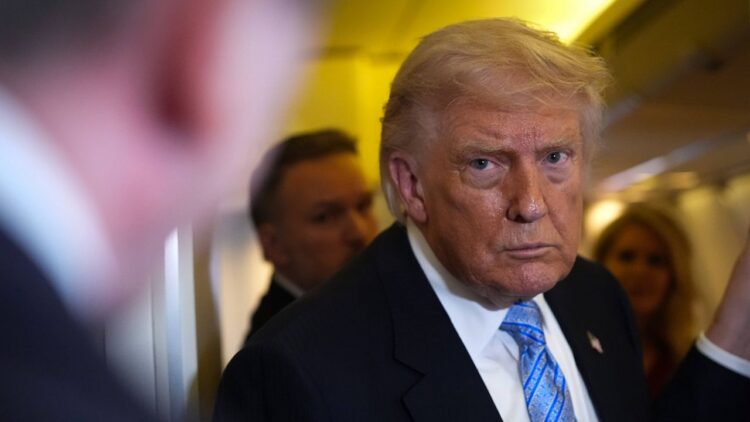
US President Donald Trump has abandoned a controversial proposal to livestream the execution of Nidal Malik Hasan, the former US Army psychiatrist convicted of killing 13 people in the 2009 Fort Hood shooting in Texas, following widespread condemnation from lawmakers, human rights officials and religious leaders.

AD: Capeesh Restaurant
In a social media post on Thursday, Trump acknowledged that broadcasting the execution might deter future acts of terrorism, arguing that it could allow the world to witness how the United States deals with terrorists. However, he said concerns raised by people who did not want to watch the execution had influenced his decision to abandon the livestream plan.
“He will die, as scheduled, by firing squad, but this event will not be streamed,” Trump wrote, adding that the victims’ immediate family members could attend the execution in person if they wished.
The decision followed mounting pressure on the administration over a proposal that would have made Hasan’s execution the first military execution in more than 60 years and the first in US history to be publicly broadcast. The plan, announced by Defence Secretary Pete Hegseth, sparked a national debate over the limits of punishment, human dignity and the role of government in administering justice.

AD: Oysterian Sea Food Restaurant And Bar
Hegseth had previously defended the proposal, arguing that a public execution could serve as a warning to potential offenders. In an interview with Real America’s Voice last Thursday, he said he supported the idea because people needed to understand that serious crimes carried serious consequences.
However, the proposal triggered criticism across the political spectrum, with several lawmakers warning that broadcasting an execution would turn the administration of justice into a public spectacle.
Yassamin Ansari, the first Iranian American Democrat elected to the US Congress, criticised the proposal in a social media post, comparing it to practices associated with authoritarian governments. She described the plan as part of what she called Trump’s authoritarian takeover of the United States.
Republican Senator Lisa Murkowski of Alaska also opposed the proposal, saying there was no justification for livestreaming an execution. She argued that such a practice was more consistent with the behaviour of terrorists and dictators than with the values expected of the United States.
Rob Bresnahan, a Republican representative from Pennsylvania, similarly warned against turning the execution into entertainment. He said the priority should remain justice for the victims and their families rather than a public display of punishment.
“Their pain deserves respect, not a public show,” Bresnahan said.
The proposed livestream also drew condemnation from international human rights officials. On Friday of the previous week, the United Nations Office of the High Commissioner for Human Rights warned that broadcasting the execution would amount to a public execution and breach the absolute prohibition of torture.
Religious leaders also joined the criticism. Archbishop Timothy Broglio, who leads the Catholic Church’s US military archdiocese, condemned the Pentagon’s proposal. The president of the US Conference of Catholic Bishops also called for the plan to be reconsidered, describing it as a “barbaric promotion of a culture of death”.
The bishops’ statement warned that publicly executing even someone responsible for grave harm could further damage the country’s moral standing and weigh heavily on the national conscience.
Within the administration, there had also been uncertainty over whether the livestream would proceed. Vice-President JD Vance appeared to question the plan last week, telling reporters he did not know whether it would actually happen and adding that he would not watch the execution if it were broadcast.
However, Markwayne Mullin, the head of the Department of Homeland Security, defended the administration’s position over the weekend. Speaking to CBS News, Mullin argued that nobody would be forced to watch the execution and praised Trump’s leadership.
Trump himself had offered conflicting signals in the days before his announcement. On Friday, he said he “absolutely” approved of the livestream proposal, but the following day indicated that he had not reached a final decision.
“There are two thoughts: don’t show it and show it,” Trump said, suggesting that publicising the execution might discourage others from committing similar crimes.
The White House’s reversal marks a retreat from a proposal that had raised significant questions about the use of public punishment in modern America. Although the administration has abandoned plans to broadcast Hasan’s death, his execution by firing squad remains scheduled, according to Trump’s announcement.
Hasan was left paralysed from the waist down after being shot by law enforcement officers during the Fort Hood attack and now uses a wheelchair. His case remains one of the most consequential military criminal cases in recent US history, while the controversy surrounding the proposed livestream has exposed deep divisions over punishment, deterrence and the standards the United States should uphold.

AD: Heritage And Restaurant Lounge Bar