
By Tony O’Reilly-
Newly released explosive government documents have cast fresh light on the deeply controversial appointment of Prince Andrew as Britain’s trade envoy, revealing that the late Queen Elizabeth II was “very keen” for her second son to take on a “prominent role in the promotion of national interests” before he formally assumed the position in 2001.
The files, published by the Government following mounting political pressure, expose behind-the-scenes discussions at the heart of Whitehall and Buckingham Palace that ultimately helped install the Duke of York into one of the country’s most high-profile international trade roles — despite what now appears to have been an absence of formal vetting or due diligence.

AD: Capeesh Restaurant
The tranche of documents paints a striking portrait of how senior officials sought to craft a prestigious post for Andrew as his Royal Navy career approached its conclusion, while simultaneously attempting to manage concerns about his public image, overseas travel and media scrutiny. The disclosures also raise uncomfortable constitutional and political questions about the relationship between the monarchy and government appointments, particularly in light of the scandals that would later engulf the former duke.
At the centre of the revelations is a memorandum sent to then-foreign secretary Robin Cook by Sir David Wright, chief executive of British Trade International, the body later incorporated into UK Trade & Investment. In the document, Sir David explained that Queen Elizabeth II had expressed a clear desire for Andrew to succeed her cousin, the Duke of Kent, in a trade promotion role connected to British commercial interests overseas.
Sir David wrote that he had held a “wide-ranging discussion” with the Queen’s private secretary, Sir Robin Janvrin, regarding how Andrew could continue serving national interests after the end of his active naval career. The memo stated that the Queen’s “wish” was for the Duke of York to assume a role previously occupied by the Duke of Kent, who was preparing to relinquish his own responsibilities as a special representative for trade.

AD: Oysterian Sea Food Restaurant And Bar
“The Duke of Kent is to relinquish his responsibilities around April next year,” Sir David noted. “That would fit well with the end of the Duke of York’s active naval career.”
The language of the correspondence strongly suggests the initiative was not merely a government appointment process but also reflected direct royal preference at the highest level. Sir David proposed identifying a “suitable role” for Andrew that would allow him to undertake regional visits, overseas trade missions and ceremonial promotional work on behalf of British business interests. The role, he suggested, would involve several international trips each year and occasional leadership of trade delegations abroad.
Even in these early stages, officials appeared conscious of the potential complications attached to Andrew’s growing public profile. One internal document warned staff at British Trade International that the duke’s “high public profile” would require “careful and sometimes strict media management”.
Another telegram sent in September 2001 stated that media considerations would become “an important factor” in deciding which engagements he should undertake, with initial proposals requiring coordination between Whitehall and Buckingham Palace to formulate joint media strategies.
The files also contain intriguing evidence that palace officials sought to tightly control perceptions surrounding Andrew’s overseas activities. In one letter, Kathryn Colvin, then head of the Protocol Division, explained that Captain Blair, Andrew’s personal private secretary at the time, had made a specific request that the duke should not be offered golfing functions while abroad.
“This was a private activity and if he took his clubs with him he would not play in any public sense,” Ms Colvin wrote.
The detail appears to reflect early concern within official circles that the duke’s reputation for luxury travel and leisure could undermine the seriousness of his trade envoy role. During his years representing Britain abroad, Andrew became the subject of intense media scrutiny and acquired tabloid nicknames such as “Air Miles Andy” and “Playboy Prince”, fuelled by his extensive overseas travel and lavish image.
The newly released files suggest government officials were already aware of the reputational balancing act required long before the later scandals that would permanently damage his public standing. One document noted that Andrew “tended to prefer the more sophisticated countries”, while another outlined areas in which he was considered particularly effective, including high-tech industries, youth projects, cultural events, Commonwealth relations and military and foreign affairs.
Ms Colvin wrote that she had been informed the duke was “particularly good on high-tech matters, trade, youth (including primary schools and outward bound projects), cultural events, with a preference for ballet rather than theatre, the Commonwealth and military and foreign affairs”.
Despite these carefully curated assessments, the publication of the files has intensified scrutiny over how Andrew was appointed in the first place and whether proper safeguards were ever applied. In a written ministerial statement issued on Thursday, trade minister Sir Chris Bryant acknowledged that the Government had found “no evidence” that any formal due diligence or vetting process had been conducted before Andrew took on the role.
Sir Chris suggested this absence of formal checks was viewed at the time as “understandable” because the appointment was considered a continuation of the royal family’s longstanding involvement in trade promotion work rather than a conventional public appointment. The Duke of Kent had previously carried out a similar role, and Andrew was effectively stepping into an established royal function rather than entering a newly created government office.
Nevertheless, critics argue the lack of vetting now appears extraordinary given the scale of access the role granted Andrew to senior political, diplomatic and commercial figures around the world. As Britain’s special representative for international trade and investment, the duke travelled extensively on behalf of the Government, meeting foreign leaders, business executives and investors in a role designed to promote British commercial interests internationally.
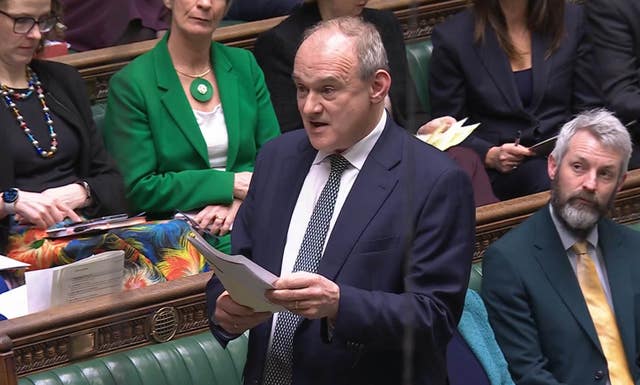 The documents were released after a humble address motion from the Liberal Democrats (House of Commons/PA)
The controversy surrounding the appointment has only deepened because of the scandals that later engulfed Andrew’s personal and public life. He stepped down from the trade envoy role in 2011 amid mounting outrage over his friendship with convicted paedophile financier Jeffrey Epstein. That same year, a photograph emerged showing Andrew with his arm around Virginia Giuffre, who alleged she had been trafficked to him by Epstein associate Ghislaine Maxwell when she was 17 years old.
Ms Giuffre claimed she had sexual encounters with Andrew in London, New York and on Epstein’s private Caribbean island. Andrew repeatedly denied the allegations and said he had no recollection of meeting her. In 2022 he reached a multimillion-pound settlement with Ms Giuffre in a civil case in the United States without admitting liability.
The former duke has also faced allegations that he shared sensitive information with Epstein during his years as trade envoy, accusations he has strongly denied. More recently, Andrew was arrested in February on suspicion of misconduct in public office before later being released under investigation. He continues to deny any wrongdoing.
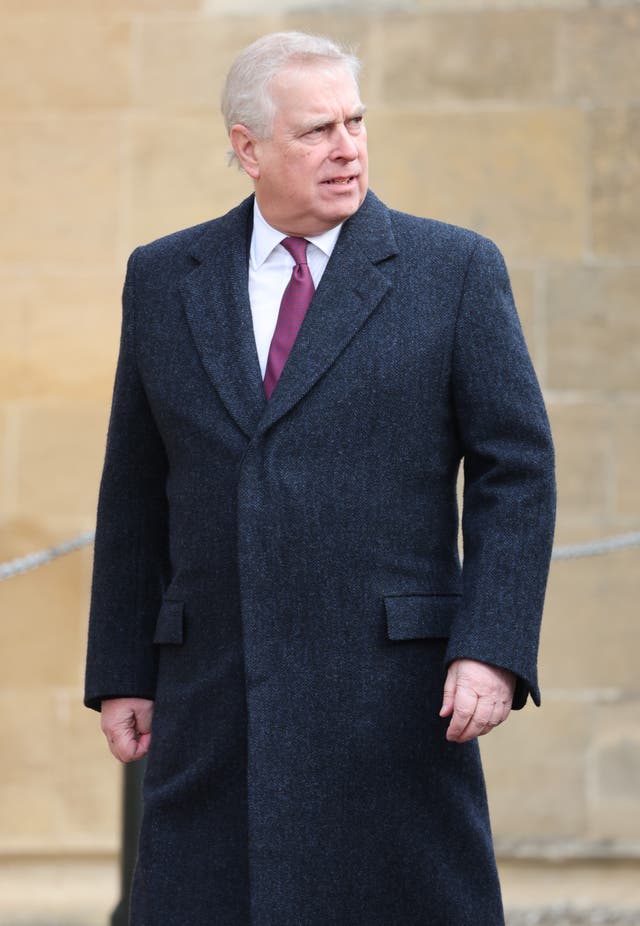 Andrew was arrested in February on suspicion of misconduct in public office and later released under investigation (Chris Jackson/PA)
The release of the documents followed a parliamentary motion tabled by the Liberal Democrats demanding greater transparency surrounding Andrew’s appointment. The party has argued that the Government has still failed to disclose the full picture, particularly concerning whether senior ministers or officials raised concerns privately at the time.
Liberal Democrat chief whip Wendy Chamberlain criticised what she described as the “small paper trail” released so far, saying the limited documentation was itself troubling. “The lack of documentation provided is itself concerning, as is the time it has taken to get this far. We must get the full files from government without delay,” she said.
Downing Street has confirmed that additional documents relating to Andrew’s appointment are expected to be released in the future, with officials stating the material is being published “as quickly as possible”. Some sections of the currently released papers remain redacted, with the Government arguing this is necessary to protect personal information and avoid prejudice to international relations.
The disclosures have reignited wider debate about transparency, accountability and constitutional boundaries between the monarchy and government. While royal involvement in trade promotion has long been accepted as part of Britain’s soft power diplomacy, critics argue the Andrew case demonstrates the dangers of informal appointment processes operating without rigorous scrutiny.
For supporters of greater constitutional reform, the revelations are likely to strengthen calls for clearer safeguards surrounding public roles linked to members of the royal family. For Buckingham Palace and the Government alike, the documents serve as a reminder that decisions once treated as routine royal-business arrangements are now being re-examined through the harsher lens of modern public accountability.
More than two decades after officials first discussed creating a “suitable role” for Prince Andrew, the consequences of that decision continue to reverberate through British political and royal life.

AD: Heritage And Restaurant Lounge Bar