
By Isabelle Wilson-
Historic sites tied to civil rights, women’s suffrage, LGBTQ+ activism, immigration struggles and Indigenous heritage have been named among America’s most endangered places, in a sweeping preservation campaign that reflects growing concern over the future of landmarks central to the nation’s fight for equality.
The annual list, released Wednesday by the National Trust for Historic Preservation, includes 11 locations spread across the United States, from New York’s Stonewall National Monument to the historic Women’s Rights National Historical Park and the President’s House Site in Philadelphia.

AD: Capeesh Restaurant
The organisation said the 2026 edition of “America’s 11 Most Endangered Historic Places” was designed to coincide with the country’s approaching 250th anniversary and to spotlight places that embody the continuing struggle to make the promise of equality a reality.
The announcement arrives at a politically charged moment in the United States, where debates over historical memory, race, gender identity and immigration have increasingly shaped public policy and cultural institutions.
Preservationists argue that many of the selected sites are threatened not only by aging infrastructure and development pressures, but also by shifting political attitudes and funding battles that could erase or diminish difficult chapters of American history.

AD: Oysterian Sea Food Restaurant And Bar
Carol Quillen, president and chief executive of the National Trust for Historic Preservation, said this year’s list intentionally focused on places that illustrate how generations of Americans challenged injustice. In interviews following the announcement, Quillen described the selected landmarks as “unsung places” where the nation’s democratic ideals were tested and expanded over time.
Among the most prominent sites on the list is Stonewall National Monument, widely regarded as the symbolic birthplace of the modern LGBTQ+ rights movement. The Manhattan landmark commemorates the 1969 Stonewall uprising, when patrons of the Stonewall Inn resisted a police raid, igniting protests that transformed the national conversation around gay rights.
The monument has recently become the center of renewed political controversy after federal officials temporarily removed the rainbow Pride flag from the site earlier this year before restoring it following public backlash and legal pressure. References to transgender people were also reportedly removed from some federal materials connected to the monument.
Preservation advocates say those disputes underscore why the site was included on the endangered list. While the monument itself remains structurally intact, campaigners argue that symbolic erasure can be just as damaging as physical neglect.
The controversy surrounding Stonewall reflects broader national tensions over how public institutions present LGBTQ+ history and identity, especially amid growing political polarization.
Another high-profile inclusion is the Women’s Rights National Historical Park, which preserves the memory of the first women’s rights convention held in 1848. The gathering in Seneca Falls became a foundational moment in the American suffrage movement, helping launch decades of activism for voting rights and legal equality.
Officials say the park now faces a maintenance backlog exceeding $10 million, threatening preservation efforts at one of the country’s most significant feminist landmarks.
The list also highlights sites linked to America’s complicated history of immigration and racial exclusion. California’s Angel Island Immigration Station, once the largest immigration processing center on the West Coast, was included because of mounting environmental and structural threats.
During the early 20th century, thousands of immigrants from Asia and the Pacific were detained and interrogated there under discriminatory immigration laws. Preservationists warn that without additional funding and restoration work, portions of the historic station could deteriorate beyond repair.
In northern California, the Tule Lake Segregation Center was added because of concerns over nearby development and limited federal protection. The site once imprisoned Japanese Americans considered “disloyal” during World War II after they were forcibly removed from their homes under wartime internment policies.
Historians say the center stands as one of the clearest reminders of how fear and nationalism can override constitutional rights during times of crisis.
Preserving the Stories Behind the Buildings
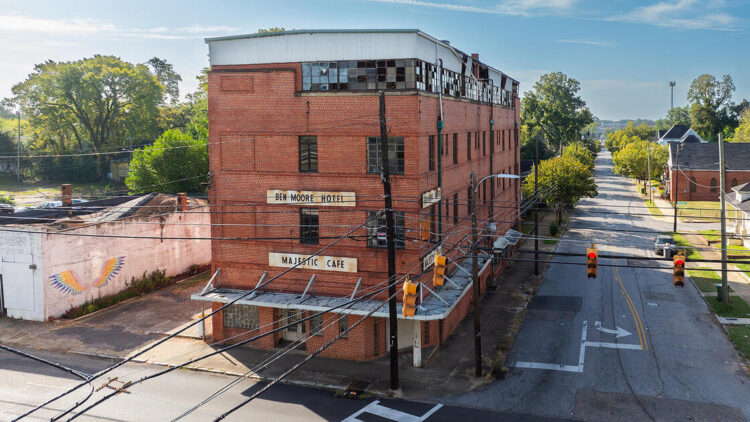
While some sites face overt political disputes, others are threatened by neglect, climate exposure, or aggressive development. In Montgomery, Alabama, the historic Ben Moore Hotel was selected because of severe structural deterioration after years of vacancy. During segregation, the hotel served as an important refuge for Black travellers barred from white-owned establishments under Jim Crow laws.
Civil rights leaders including Martin Luther King Jr. and Ralph Abernathy were known to have stayed there during organising efforts in the South.
Preservation groups say the hotel’s decline mirrors the broader vulnerability of many African American heritage sites across the United States. Historically Black neighborhoods and landmarks have often faced disproportionate neglect, demolition, or redevelopment pressures, particularly in rapidly growing cities where rising property values encourage commercial expansion.
In Detroit, the Detroit Association of Women’s Clubs was included after water damage forced the closure of the organisation’s historic headquarters.
Founded in 1921, the association became one of the first Black women’s organisations in Detroit to own its own building, serving as a center for civic activism, education and social reform. Preservation advocates say the site represents an overlooked chapter in the history of Black women’s leadership in the United States.
The endangered list also stretches into the American Southwest, where the Greater Chaco Cultural Landscape was selected because of fears that changes to federal land policy could expose culturally sensitive Indigenous areas to oil and gas development.
The landscape holds profound significance for Pueblo and Hopi communities, containing archaeological and ceremonial sites that date back more than a millennium.
Tribal leaders and preservationists have repeatedly called for stronger federal protections and deeper consultation with Native communities before approving industrial projects in the region.
Elsewhere, the century-old El Corazon Sagrado de la Iglesia de Jesus near the U.S.-Mexico border faces threats linked to proposed border wall construction.
The adobe church once served Mexican and Mexican American farming communities living along the Rio Grande and remains an important symbol of cultural continuity in the borderlands. Preservation groups fear nearby construction could permanently alter the historic landscape surrounding the site.
The first time since the endangered list was created in 1988, each selected site will receive a $25,000 preservation grant from the National Trust. Officials say the funding is intended to support stabilization projects, educational programming, and public awareness campaigns aimed at preventing further deterioration.
History, Politics and the Fight Over Memory
The release of the list reflects a broader international debate over how nations preserve contested histories. In recent years, cultural institutions around the world have become battlegrounds for arguments over colonialism, slavery, race and national identity.
Organisations such as UNESCO World Heritage Centre have repeatedly warned that political conflict, urban expansion and environmental damage are placing historic sites at increasing risk globally.
In the United States, these debates have intensified during a period of heightened political division. Federal agencies, museums and national parks have faced scrutiny over how they describe slavery, Indigenous displacement, civil rights struggles and gender identity in public exhibits.
Some historians argue that historic preservation has become inseparable from wider cultural battles over whose stories are remembered and whose are marginalised.
The President’s House Site illustrates that tension clearly. The site preserves the location where George Washington lived while Philadelphia served as the nation’s capital during the 1790s.
Recent disputes emerged after exhibits discussing enslaved people who lived and worked there were reportedly removed as part of broader federal efforts to revise public historical displays. The matter has since become the subject of legal and political conflict between city officials and the federal government.
Supporters of preservation efforts argue that the endangered list is not simply about architecture but about protecting public memory itself. Historic buildings, they say, function as physical evidence of struggles that shaped modern democracy, civil liberties and equal rights. Losing those spaces could weaken future generations’ understanding of how social progress occurred and how fragile those gains can be.
Since launching the endangered places initiative nearly four decades ago, the National Trust says the program has helped save hundreds of threatened landmarks through fundraising campaigns, restoration projects and public advocacy. Many sites that once appeared on the list have since been rehabilitated and reopened to visitors.
Whether the newly listed landmarks can secure long-term protection remains uncertain. Some require extensive structural restoration, while others face political and legal obstacles that preservation grants alone may not resolve. Yet advocates believe the publicity generated by the list can mobilise public support before it is too late.

AD: Heritage And Restaurant Lounge Bar