
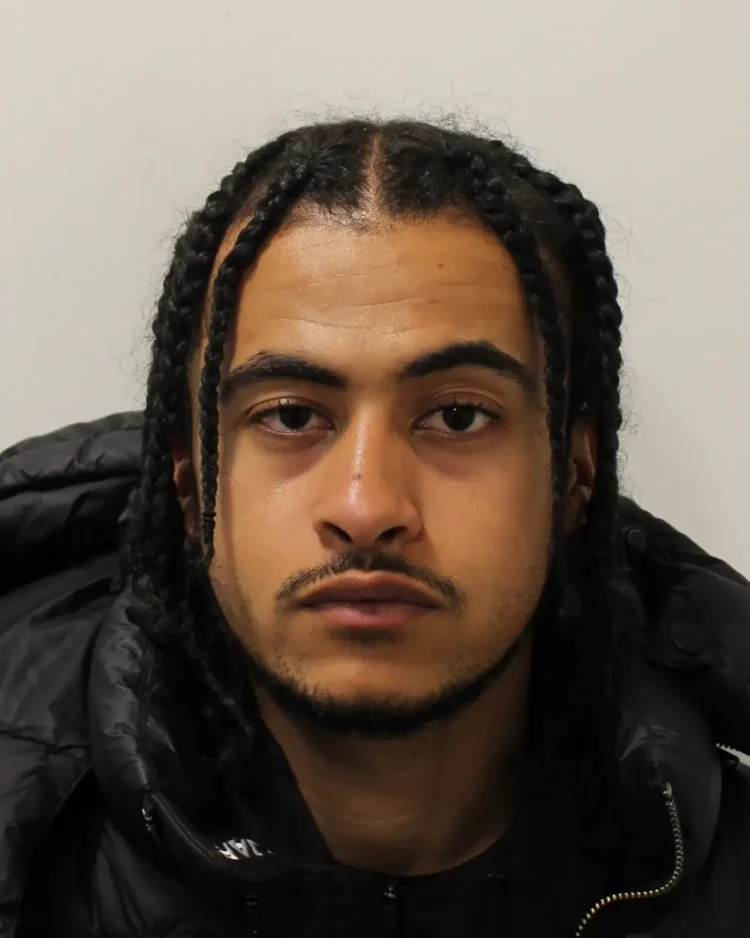
Two men have been convicted over a drive-by shooting that killed a mother of two outside a church in north London have reignited concerns over the enduring grip of gang violence, the circulation of illegal firearms and the devastating impact of organised criminal rivalries on ordinary communities caught in the crossfire.
The case, which culminated in guilty verdicts at the Old Bailey, has shocked even seasoned observers of violent crime because of the setting in which the attack unfolded: a wake attended by grieving families, elderly mourners and young children gathered outside a Pentecostal church.
Michelle Sadio, 44, was killed on the evening of December 14, 2024, after gunmen opened fire from a moving vehicle outside the River of Life Pentecostal Church in Willesden. More than 100 mourners had gathered to pay tribute to 80-year-old Dianne Boatong when a black Kia pulled up shortly after 9pm and shots rang out into the crowd. Sadio, who had come to support friends and relatives attending the wake, was fatally struck.

AD: Capeesh Restaurant
Two other men were wounded in the attack, including Kenneth Amoah, a 39-year-old contractor working for Transport for London, who was paralysed after being shot in the back. A third victim, Kadeem Francis, suffered a gunshot wound to the foot.
He was careful to give himself an alibi for the night of the murder. Officers obtained information from Allen-Thomas’s curfew tag – fitted after his release from prison for a drugs offence – and an Uber account registered to a friend that made a cab journey at the exact time of the incident, and appeared to support his alibi.

AD: Oysterian Sea Food Restaurant And Bar
Amir Salem, who bought the fuel used to torch the getaway car, acted as a go-between – with phone data obtained by detectives pointing to him communicating with the gunmen in the car via social media messages before relaying news of the shooting in a call to Allen-Thomas three minutes after the incident.
Following a lengthy trial, jurors convicted Perry Allen-Thomas, 27, and Amir Salem, 20, of murder and two counts of attempted murder. The pair now face life sentences. Prosecutors argued throughout the proceedings that the intended target of the shooting had been 33-year-old rapper Adetokunbo Ajibola, known within music circles and on social media as Trapstar Toxic, who was among those attending the wake.
The court heard that the attack bore all the hallmarks of a planned gang retaliation operation in which indiscriminate violence was unleashed in a public setting with little regard for the innocent people present. The case has once again exposed the increasingly brazen nature of firearm violence in parts of London, where longstanding disputes between criminal groups have repeatedly spilled into public spaces, often with catastrophic consequences for bystanders.
Prosecutors told jurors that the black Kia used during the attack had been stolen and fitted with false number plates in an apparent effort to frustrate police investigations. Evidence presented during the trial also revealed that Salem purchased some of the petrol later used to burn out the vehicle after the shooting, a tactic commonly employed to destroy forensic evidence and conceal the identities of those involved.
Although prosecutors established the involvement of Allen-Thomas and Salem in orchestrating the attack, the court heard that uncertainty remains over which individual inside the vehicle actually fired the fatal shots.
At least four bullets were discharged into the crowd in what prosecutors described as a calculated assault linked to organised criminal activity. Two additional suspects believed to have been travelling inside the Kia are thought to have fled the United Kingdom after the attack and remain outstanding.
Perhaps most disturbing was evidence surrounding the firearm itself.
Jurors heard that the weapon used in the shooting had become known among investigators as a “gang gun”, having already been connected to two earlier shootings in the months preceding Sadio’s death. The revelation highlighted one of the most persistent challenges confronting police forces across Britain: the underground circulation of a relatively small number of highly dangerous illegal firearms repeatedly reused in violent criminal attacks.
The presence of such weapons has long fuelled fears about the evolution of gang violence in London. While Britain maintains some of the strictest gun control laws in the world, organised criminal groups have nevertheless continued to gain access to firearms through black-market trafficking routes linked to eastern Europe, converted blank-firing weapons and smuggled handguns.
Law enforcement agencies have repeatedly warned that although gun crime levels in Britain remain far below those seen in countries such as the United States, the use of firearms within organised gang conflicts has become increasingly ruthless and unpredictable.
The killing of Sadio carries painful echoes of previous incidents in which innocent civilians lost their lives during gang-related attacks intended for others. Over the last two decades, London has witnessed a series of high-profile cases in which bystanders, children and relatives of intended targets have been killed amid escalating territorial feuds.
The 2007 murder of 11-year-old Rhys Jones in Liverpool became a defining national moment in public understanding of gang violence after the schoolboy was shot while walking home from football practice. In London itself, the 2022 fatal shooting of nine-year-old Olivia Pratt-Korbel in her own home horrified the public and intensified demands for tougher action against organised criminal groups and illegal firearms networks.
The attack outside the church in Willesden has generated particular anguish because it shattered a moment of communal mourning and spiritual reflection. Pentecostal churches have historically served as important centres of social support, especially within London’s African and Caribbean communities, offering not only religious guidance but also welfare support, youth mentorship and protection from the pull of gang culture.
The notion that mourners attending a wake could become targets of gunfire outside a church has left many local residents deeply shaken.
Community leaders have described the shooting as emblematic of how criminal violence increasingly disregards traditional boundaries of sanctuary and respect. Churches, funeral gatherings and memorial events have in the past often been treated, at least informally, as spaces insulated from gang disputes.
However, recent years have seen mounting concern that retaliatory violence is becoming less restrained, with criminal groups more willing to target rivals in highly public locations regardless of the risks posed to innocent people.
During the trial, prosecutors painted a picture of a carefully coordinated operation. Salem was said to have maintained contact with the Kia’s occupants during the evening of the attack while relaying information back to Allen-Thomas. Surveillance evidence and mobile phone data formed a significant part of the prosecution’s case.
The pair denied involvement throughout the proceedings, but jurors ultimately concluded that the evidence established their participation in the conspiracy leading to the shooting. The case also highlights the increasingly complex relationship between elements of Britain’s rap scene and organised criminal investigations. Prosecutors identified Ajibola, known as Trapstar Toxic, as the alleged intended target.
In recent years, police and legal authorities have repeatedly scrutinised aspects of the UK drill and rap scene, arguing that online feuds, music videos and social media taunts sometimes intensify real-world gang rivalries. Artists and campaigners, however, have frequently pushed back against what they see as the unfair criminalisation of black music culture, insisting that the overwhelmingmajority of musicians are not involved in organised violence.
That tension has become a recurring feature of modern policing debates in London. Authorities have in some cases sought injunctions restricting performances or online uploads linked to specific artists, claiming lyrics and videos have been used to threaten rivals or glorify violence.
Critics argue such measures risk conflating artistic expression with criminal conduct and disproportionately target young black men. The Willesden shooting is likely to renew those debates, particularly because prosecutors directly linked the attack to an alleged gang target with a public music profile.
At the same time, the case underscores the profound human cost of retaliatory gang violence. Michelle Sadio was not accused of involvement in criminality. She was a mother attending a wake. Kenneth Amoah, whose injuries left him paralysed, was simply among those gathered to mourn an elderly woman’s passing.
The random and indiscriminate nature of the violence has reinforced fears that ordinary residents living in affected neighbourhoods increasingly bear the consequences of conflicts in which they play no part. London’s battle against organised violence has evolved significantly over recent decades. During the late twentieth century, firearm offences in Britain remained comparatively rare, with most gang violence involving knives or improvised weapons.
However, the growth of international drug trafficking networks, county lines operations and organised urban gangs gradually transformed the landscape. The early 2000s, shootings linked to territorial disputes had become a major concern in parts of London, Manchester, Birmingham and Liverpool.
Successive governments responded with specialised police units, expanded surveillance powers and targeted gang intervention programmes. The Metropolitan Police Service developed dedicated Trident units focused initially on gun crime within black communities before later expanding their remit.
Community outreach initiatives, youth intervention programmes and tougher sentencing laws were introduced alongside intensified firearm enforcement operations. While these measures contributed to periods of declining gun crime, experts have repeatedly warned that underlying social conditions driving gang recruitment — poverty, exclusion, unstable housing and youth unemployment — remain unresolved in many areas.
The Willesden case also reflects the enduring challenge posed by retaliatory violence cycles. Criminologists have long noted that gang shootings frequently operate according to patterns of revenge and perceived disrespect, where one attack triggers another in escalating succession. The use of the same firearm in multiple shootings, as revealed during the trial, illustrates how a single weapon can become embedded within ongoing networks of criminal retaliation.
The residents of Willesden and the surrounding communities of north-west London, the shooting has left lasting trauma. Witnesses described scenes of panic and horror as mourners fled for cover while children screamed and victims collapsed outside the church entrance.
Emergency services rushed to the scene, but the damage had already been done. Sadio’s death quickly became a symbol of how deeply gang violence can wound entire communities, extending far beyond those directly involved in criminal rivalries.
The guilty verdicts against Allen-Thomas and Salem will bring some measure of accountability, but many questions remain unanswered. Police continue to investigate the identities and whereabouts of the additional suspects believed to have fled abroad.
Detectives are also expected to continue efforts to trace the wider chain of possession surrounding the firearm used in the attack. Such investigations are notoriously difficult because illegal guns often circulate through multiple intermediaries across criminal networks.
As Britain confronts ongoing concerns over violent crime, the killing of Michelle Sadio is likely to remain a haunting reminder of the fragility of public safety even in spaces traditionally associated with refuge and mourning. The image of gunfire erupting outside a church wake has become emblematic of a wider anxiety about the erosion of communal boundaries once thought untouchable by organised violence.
For Sadio’s family, however, the political and social debates surrounding gang crime are secondary to a far more personal reality: the loss of a mother whose life ended while attending a gathering meant to honour another family’s grief.
Nearly every major discussion about gang violence in modern Britain eventually returns to the same devastating truth — that behind every headline, every criminal trial and every policy argument are ordinary people whose lives are permanently shattered by acts of violence they neither expected nor deserved.

AD: Heritage And Restaurant Lounge Bar
-
Share On
- Categories
- Date