
By Ben Kerrigan-
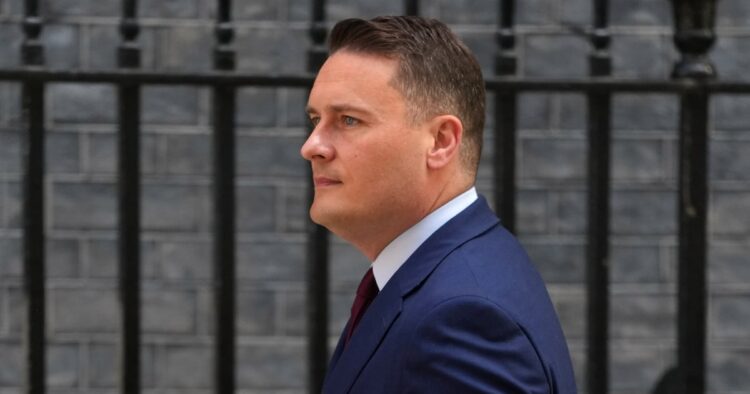
Britain’s political landscape was upended on Thursday after Health Secretary Wes Streeting resigned from government, triggering an extraordinary escalation in internal Labour tensions and opening the door to a potential leadership challenge against Prime Minister Keir Starmer.
Streeting’s departure confirmed through a sharply worded resignation letter in which he said he no longer had “confidence” in Starmer’s leadership marks one of the most serious public breaks within a governing party in recent years. His exit comes amid mounting dissatisfaction inside Labour ranks following disappointing local election results and growing unease over the party’s political direction less than two years after its general election victory.

AD: Capeesh Restaurant
Streeting’s resignation immediately triggered speculation that he could move from internal critic to formal leadership challenger, with Westminster insiders noting that his departure sharpened focus on whether a contest against Keir Starmer could be mounted.
However, reports highlights that any such challenge would require the backing of around 20% of Labour MPs approximately 81 members before a contest could be triggered, and that while pressure against Starmer has been building, support does not necessarily translate into organised backing for any single challenger.
Despite claims from some MPs that dissatisfaction with the Prime Minister is widespread, ITV’s tracking shows that firm commitments remain fragmented, leaving potential contenders including Streeting himself still short of a consolidated parliamentary base.

AD: Oysterian Sea Food Restaurant And Bar
Streeting’s exit is widely interpreted in Westminster as removing a major constraint on open manoeuvring within the party, with reporting suggesting that leadership speculation is now accelerating and several senior figures are beginning to position themselves in anticipation of a possible contest.
Starmer responded by moving swiftly to replace Streeting and publicly defending his leadership, insisting that the government remains focused on delivery rather than internal division. However, behind the scenes, Labour MPs are openly debating whether the Prime Minister can survive growing unrest within his own party, with some warning that the situation risks spiralling into a prolonged leadership crisis.
The developments represent a dramatic reversal for a government that came to power promising stability after years of Conservative turmoil. Instead, Labour now finds itself confronting internal fragmentation, competing ambitions at the highest level, and renewed questions about its direction in office.
Streeting’s resignation and the immediate political fallout
Streeting’s resignation letter, released publicly on Thursday, was unusually direct in its criticism of Starmer’s leadership. He argued that the Prime Minister had failed to provide the “vision and direction” required to unite the party and respond to voter disillusionment.
In comments reported by multiple outlets, he suggested Labour MPs and trade unions were now seeking a broader debate about the party’s future, rather than continued loyalty to the current leadership structure. Streeting exit follows weeks of speculation that he was preparing to resign in order to force a leadership contest.
Reports had indicated that he was actively working to secure enough support among MPs to meet the threshold required to formally trigger a challenge, a move that would have placed Starmer’s premiership directly on the ballot. The resignation also comes against the backdrop of worsening internal party tensions. Labour’s poor performance in recent local elections has intensified scrutiny of Starmer’s leadership style and policy direction, with critics arguing that the party has failed to maintain momentum since entering government.
Within hours of Streeting’s departure, Downing Street confirmed that he would be replaced as Health Secretary, signalling the Prime Minister’s intent to reassert authority and prevent further ministerial resignations from cascading through Cabinet.
A leadership contest in waiting
Although Streeting has not formally launched a leadership campaign, his resignation is widely viewed as the most significant step yet toward a potential contest for the Labour leadership. Under party rules, any challenger must secure nominations from around 20% of Labour MPs currently about 81 members of the House of Commons before a contest can proceed.
The emerging instability has rapidly broadened beyond a single figure. Senior Labour personalities including Angela Rayner and Andy Burnham are now being discussed as potential contenders, while former leader Ed Miliband has also been floated as a possible unifying candidate in the event of a drawn-out contest.
Streeting’s allies have argued that the party is entering a period where internal debate over leadership is unavoidable, suggesting that Labour MPs and unions are increasingly divided over whether Starmer remains the right figure to lead the party into the next general election.
Starmer, meanwhile, has taken a defiant stance, warning colleagues that a leadership contest would risk plunging the government into “chaos” at a time of economic and international uncertainty. His supporters argue that replacing him now would destabilise a government still early in its term and struggling to deliver its policy agenda.
Yet despite that warning, the political momentum inside Labour appears to be shifting. With a senior Cabinet figure now out of government and multiple potential successors openly manoeuvring, Westminster is bracing for what could become one of the most consequential internal party battles in recent Labour history.
If a contest is formally triggered in the coming weeks, it would force MPs, members and unions into a nationwide vote that could redefine the party’s direction and potentially decide whether Keir Starmer remains in office at all.
Under Labour’s rules, any successful challenger must first clear the parliamentary hurdle before the contest moves into a broader party vote, meaning the initial phase would play out in Westminster corridors where loyalties can shift rapidly and publicly stated positions often lag behind private manoeuvring.
However, the balance of power shifts dramatically to the wider party membership and affiliated trade unions, whose votes can override the preferences of MPs and reshape the outcome in unpredictable ways. A leadership contest of this scale would effectively become a referendum on Starmer’s approach to government, including his attempts to balance fiscal restraint with Labour’s traditional commitments on public services, taxation, and industrial policy.
It would also expose deeper ideological divides that have been managed but not resolved since Labour entered government, particularly between those who favour a cautious, managerial style of governance and those who argue for a more assertive shift in economic and social policy. Trade unions, in particular, could play a decisive role if they mobilise behind a candidate who promises a clearer break from current strategy.
The practical consequences for government could be immediate. A contested leadership battle would likely absorb political attention across Whitehall, weaken Cabinet cohesion, and slow the delivery of policy as ministers and MPs align themselves with rival camps. Markets and international partners would also be watching closely for signs of instability at the top of government, especially if the contest becomes prolonged or bitter.
In such a scenario, the outcome would go beyond a simple change of leadership. It would determine whether Labour continues on its current governing path or undergoes a rapid ideological re-calibration mid-term, with Starmer’s authority and potentially his premiership hanging in the balance throughout the process.

AD: Heritage And Restaurant Lounge Bar