
By Ben Kerrigan-
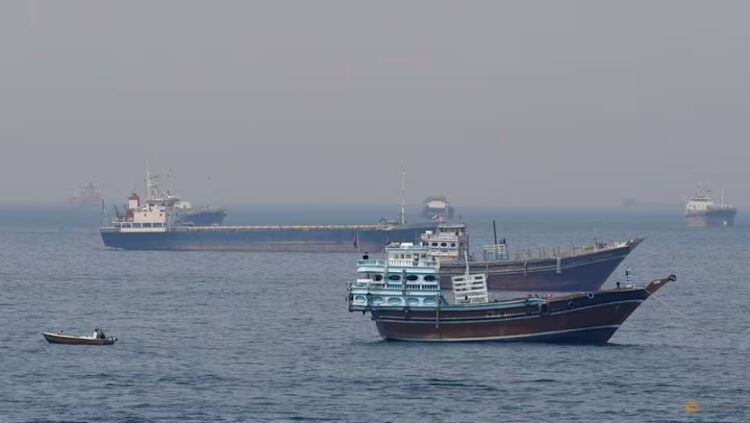
Iranian forces have seized two commercial vessels in the Strait of Hormuz following the extension of a U.S.-brokered ceasefire by President Donald Trump, sharply escalating tensions in one of the world’s most strategically sensitive waterways and raising fears of renewed confrontation in the Gulf.
The incident, confirmed by multiple international reports and regional officials, saw Iran’s Islamic Revolutionary Guard Corps (IRGC) intercept the vessels shortly after Washington announced it would extend the ceasefire without a clear timeline for renewed negotiations with Tehran.

AD: Capeesh Restaurant
The seized ships identified as the Panama-flagged MSC Francesca and the Liberia-flagged Epaminondas were reportedly accused by Iran of violating maritime regulations and operating without proper authorisation in the narrow shipping lane that connects the Persian Gulf to global markets.
The move comes amid an already fragile diplomatic pause between Washington and Tehran, with the Strait of Hormuz once again emerging as a flashpoint in a wider geopolitical standoff that has drawn in regional powers and disrupted global energy flows.
Seizures Escalate Tensions After Ceasefire Extensions

AD: Oysterian Sea Food Restaurant And Bar
According to Iranian state-linked media, the IRGC said the vessels were “disrupting order and safety” in the strait and were escorted into Iranian waters after alleged navigation violations.
The timing of the operation has drawn particular scrutiny, coming just hours after President Trump extended the ceasefire agreement while maintaining what U.S. officials have described as a continued naval blockade of Iranian ports.
Iranian officials have argued that the blockade itself constitutes a breach of the ceasefire terms, accusing Washington of sending “contradictory signals” while expecting Tehran to engage in fresh negotiations. Iranian negotiators have also warned that the security of the Strait of Hormuz cannot be guaranteed under current conditions.
The United States, meanwhile, has maintained that its maritime operations are defensive and aimed at preventing weapons transfers and enforcing sanctions. U.S. officials have not publicly confirmed operational details regarding the seized vessels but have condemned Iran’s actions as destabilising and provocative.
The Strait of Hormuz, through which roughly one-fifth of global oil shipments pass, has long been considered a critical chokepoint for global energy security. Any disruption in the waterway has immediate implications for international oil prices and shipping insurance costs, both of which have already begun to rise in response to the latest escalation.
Reports indicate that at least one of the seized vessels may have sustained damage during the interception, with gunfire reportedly directed at a third ship in the same area, though all crew members are understood to be safe.
The developments come amid broader instability in the region, with parallel tensions involving Israel, Hezbollah, and other regional actors contributing to an already volatile security environment.
The seizure of two vessels in the Strait of Hormuz highlights the fragility of the current ceasefire arrangement, which was intended to pause months of escalating hostilities between Iran and U.S.-aligned forces in the region, coming amid a broader effort by Washington to extend the truce in order to allow more time for negotiations following stalled talks in Pakistan.
While the extension was publicly framed by U.S. President Donald Trump as an opportunity to create space for renewed diplomacy, this notes that no agreed negotiation framework has been established, with key talks collapsing and follow-up discussions repeatedly delayed amid rising mistrust between both sides.
Both Washington and Tehran have continued to accuse each other of violating the spirit of the ceasefire, with Iran objecting to continued U.S. naval pressure in the region and the United States insisting that Iran has failed to present a “unified proposal” for peace, leaving the truce increasingly unstable and vulnerable to maritime incidents that threaten to derail diplomatic efforts entirely .
Iranian officials have insisted that meaningful talks cannot proceed while sanctions and maritime restrictions remain in place, while U.S. officials have demanded that Tehran halt certain military and nuclear-related activities as a precondition for broader negotiations.
Analysts say the situation reflects a deeper breakdown in trust, with both sides testing the limits of deterrence in the strategically vital waterway. The Strait of Hormuz has previously been the site of tanker seizures, drone incidents and naval confrontations, but the current escalation marks one of the most serious flare-ups since the latest round of tensions began.
Oil markets reacted quickly to the news, with prices rising amid fears that further disruptions could affect global supply chains. Shipping companies are also reported to be reviewing routes through the Gulf, with some vessels opting for longer and more expensive alternative passages where possible.
International observers have warned that continued escalation could draw in additional regional actors and further complicate already stalled diplomatic efforts. Mediation attempts involving third-party states have so far failed to produce a framework acceptable to both Washington and Tehran.
At the centre of the dispute remains the question of control and access to the Strait of Hormuz itself, with Iran asserting increasing authority over shipping in the region while the United States continues to challenge that claim through its naval presence.
The situation remains highly unstable, with both sides maintaining hardline positions and no immediate sign of de-escalation. The seizure of the two vessels has added a new layer of uncertainty to an already volatile standoff, raising concerns that the ceasefire extension may prove short-lived unless diplomatic progress can be achieved quickly.
While regional tensions continue to mount, the Strait of Hormuz remains both a symbol and a potential trigger of wider conflict, with global attention now focused on whether diplomacy can recover before further incidents push the situation beyond control.
The narrow waterway, through which a significant share of the world’s oil supply passes, has increasingly become a pressure point in broader geopolitical rivalries, where even minor confrontations at sea carry outsized economic and political consequences.
Shipping companies are already reassessing routes and insurance premiums have begun to rise, reflecting growing concern that maritime disruptions could become more frequent if the current standoff persists.
Governments across Europe and Asia, heavily reliant on Gulf energy flows, are closely monitoring developments, wary that any prolonged disruption could feed into inflationary pressures and energy insecurity.
Diplomatic channels remain fragile and uneven, with mediation efforts struggling to bridge the gap between entrenched positions. Washington continues to frame the ceasefire as a pathway toward structured negotiations, while Tehran insists that meaningful dialogue cannot proceed without significant changes to sanctions and military posturing in the region.
This divergence has left the situation in a precarious state, where communication gaps and mistrust risk amplifying the likelihood of miscalculation. In this scenario, the Strait of Hormuz has become more than a shipping route; it serves as an indicator of regional stability, with the next event potentially deciding if diplomacy is reinstated or if further escalation ensues

AD: Heritage And Restaurant Lounge Bar