
By Lucy Caulkett-
An independent inquiry has cleared a Bristol secondary school of antisemitism after it postponed a visit by a Jewish Member of Parliament amid concerns about planned protests, concluding that the decision was made purely on safeguarding grounds rather than political or religious bias.
The case, which drew national attention and political criticism earlier this year, centred on Bristol Brunel Academy in east Bristol and its decision to delay a scheduled visit from Labour MP Damien Egan. The school had faced accusations in some quarters that the postponement reflected antisemitic attitudes or external political pressure, claims that have now been firmly rejected by investigators.

AD: Capeesh Restaurant
According to the findings, there was no evidence that antisemitism influenced the school’s decision-making process, nor that outside groups dictated its actions. The inquiry instead concluded that staff acted out of concern for the safety of pupils, staff and the visiting MP after learning of potential protests linked to the visit.
The findings were reinforced by a separate Ofsted inspection, which also found no evidence of political bias within the school and confirmed that it was appropriately teaching about a range of cultures and beliefs.
The independent review, led by retired headteacher Dame Joan McVittie, found that the school’s decision to postpone the visit was driven by safeguarding concerns after it became aware of a planned protest outside the premises.

AD: Oysterian Sea Food Restaurant And Bar
Investigators concluded that school leaders were responding to what they perceived as an uncertain and potentially disruptive situation, with limited clarity over the scale of the protest or the groups involved. This created a scenario in which the priority had to be the safety of students, staff and visitors.
The inquiry stressed that such decisions are not uncommon in schools when external events risk disrupting education or creating security concerns. In this case, the review found no evidence that antisemitism played any role in the decision-making process, nor that staff acted on the basis of the MP’s religion or political affiliations.
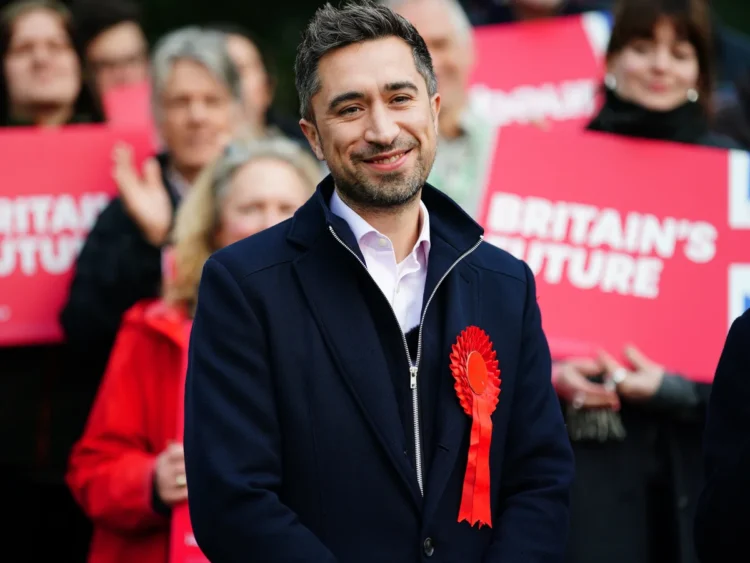
Damien Egan, the Labour MP for Bristol North East and a prominent member of Labour Friends of Israel, had been due to speak to students about democracy and his role in Parliament when the visit was first postponed in September 2025.
Although the postponement was initially interpreted by some commentators as politically motivated, further scrutiny and the subsequent inquiry found that the school had acted in line with safeguarding procedures and was attempting to minimise disruption to students.
The report also noted that communication and planning procedures could have been improved, particularly in relation to identifying potential risks earlier. However, these shortcomings were classified as procedural rather than ideological.
The controversy surrounding the postponed visit escalated quickly beyond the school itself, with political figures and media outlets weighing in on whether the decision reflected a broader issue of antisemitism in educational settings.
The Education Secretary at the time ordered an independent inquiry amid concerns that the incident was part of a wider rise in tensions in schools following the escalation of the Israel–Gaza conflict. However, investigators ultimately found no evidence of discriminatory intent or a hostile environment towards Jewish people within the school.
Reports at the time suggested that external groups had expressed opposition to the MP’s visit, contributing to the school’s concerns about potential demonstrations. However, the inquiry concluded that there was no coordinated campaign influencing the school’s leadership.
Instead, it found that the decision-making process was shaped primarily by safeguarding considerations, including uncertainty over the nature of any protest activity and the potential impact on students.
It also suggested improved coordination with police and local authorities in situations where public interest or security concerns may arise. These recommendations, the report said, would help ensure that future decisions are better informed and less vulnerable to misunderstanding.
Despite the controversy, the visit by Damien Egan eventually went ahead in February 2026 after being rescheduled, with the MP meeting students and staff under revised arrangements.
In response to the findings, education sector leaders emphasised that schools are increasingly operating in a highly sensitive environment, where political tensions can quickly intersect with safeguarding responsibilities.
Some school leaders warned that institutions are often placed in difficult positions when external protests are announced, forcing rapid decisions based on incomplete information. They argued that while transparency is important, safeguarding must remain the overriding priority in any such scenario.
The Department for Education has separately acknowledged rising levels of antisemitic incidents in schools and colleges across the UK in recent years, with official data indicating a significant increase in reported cases since 2023.
In response, the department has commissioned an independent review into how educational institutions identify, respond to and prevent antisemitism, including how schools manage incidents linked to broader political tensions and external pressures.
The review forms part of a wider government effort to strengthen safeguarding and improve consistency in how hate-related incidents are handled across the education sector.
However, the conclusion of the inquiry brings formal closure to a dispute that briefly placed the school at the centre of a national political debate.
The findings make clear that while mistakes were made in process and communication, there was no evidence that antisemitism influenced the decision to postpone the visit, and that safeguarding concerns were the decisive factor.
The school has been cleared of wrongdoing, though it is now expected to implement the inquiry’s recommendations to strengthen procedures and rebuild trust following months of scrutiny. While the findings remove the allegation of antisemitism, they also underline the importance of clearer communication and more robust risk assessment processes when handling sensitive external visits.
School leaders have been advised to review how they assess potential disruption linked to public events, particularly where political or international issues may increase the likelihood of protests or heightened attention.
Education officials have stressed that even when no discrimination is found, the perception of bias can have lasting consequences for community confidence. In this case, the controversy attracted national media coverage and political commentary, placing the school under sustained public pressure.
Rebuilding trust is therefore expected to involve not only procedural improvements but also engagement with parents, staff and community groups to reaffirm the school’s commitment to neutrality and safeguarding.
The inquiry also highlights the broader challenges facing schools in navigating politically sensitive issues in an increasingly polarised environment.
With external events more frequently influencing school life, institutions are being urged to adopt clearer guidelines and strengthen coordination with local authorities. The emphasis now transitions from inquiry to execution, as it aims to prove that insights have been gained and that upcoming choices will be made with improved clarity and assurance

AD: Heritage And Restaurant Lounge Bar