
By Aaron Miller-
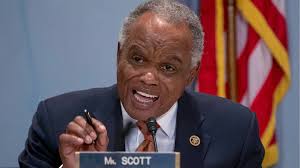
David Scott, a longtime Democratic congressman from Georgia who spent more than two decades in the U.S. House of Representatives, has died at the age of 80 while actively seeking a 13th term in office, according to multiple reports and congressional officials.
Scott’s death, confirmed on Wednesday, closes a political career spanning more than half a century, from his early years in the Georgia state legislature to his rise as a senior figure in Congress. He had represented Georgia’s 13th Congressional District since 2003 and remained a familiar figure in Washington even as health concerns increasingly limited his public appearances in recent years.

AD: Capeesh Restaurant
The cause of death has not been publicly disclosed. His passing comes at a politically sensitive moment, altering the balance in a narrowly divided House of Representatives and prompting preparations for a special election to fill his seat.
Scott had continued his reelection campaign despite growing scrutiny over his health and capacity to serve, underscoring his long-standing commitment to public life. That determination, while admired by supporters, had also drawn criticism from some within his own party, reflecting broader debates about age and leadership in Congress.
Born in South Carolina in 1945, Scott’s path to national politics began in business before he entered public service in the 1970s, winning election to the Georgia House of Representatives and later the state Senate. His election to Congress in 2002 marked the start of a tenure that would make him one of the most influential lawmakers in agricultural policy.

AD: Oysterian Sea Food Restaurant And Bar
He made history as the first Black chairman of the House Agriculture Committee, a role that cemented his national profile and expanded his influence over farm policy, food assistance programmes and rural development initiatives.
Colleagues frequently described him as a pragmatic lawmaker who bridged political divides, reflecting his membership in the centrist Blue Dog Coalition and his willingness to work across party lines.
Despite representing a largely suburban and urban district in the Atlanta area, Scott became a leading advocate for farmers and rural communities. He championed funding for historically Black colleges and universities, supported veterans’ programmes and pushed for measures to reduce hunger and expand economic opportunity.
His legislative focus often extended beyond Capitol Hill into direct engagement with constituents. Reports note that he prioritised community outreach, including job fairs and educational initiatives, reinforcing a reputation as a lawmaker deeply connected to local concerns.
However, Scott’s later years in Congress were marked by increasing concerns about his health. He had reduced his public appearances significantly and had not spoken on the House floor for an extended period, raising questions about his ability to continue in office.
Those concerns eventually led to his removal as the top Democrat on the Agriculture Committee, a rare move that highlighted growing unease among colleagues. Yet even after losing that leadership role, Scott remained committed to his reelection bid, entering a crowded primary field as he sought another term.
Political Impact And legacy In Closely Divided Congress
Scott’s death carries immediate political implications. His absence narrows Democratic numbers in the House, where margins have already been tight, and triggers a special election in Georgia’s 13th Congressional District. The outcome of that race could influence legislative dynamics in Washington, particularly in closely contested votes.
The broader context also underscores a pattern within Congress, where several members have died in office in recent months, reflecting both the aging composition of the chamber and the pressures faced by long-serving lawmakers.
Tributes to Scott have come from across the political spectrum, with colleagues praising his decades of service and his advocacy for working families, farmers and underserved communities. House Democratic leaders described him as a committed public servant whose work helped shape national policy on agriculture and food security.
Scott’s career represents both the advantages and challenges of long tenure. His experience and policy expertise enabled him to influence major legislative areas, but his later years also illustrated the difficulties of maintaining active leadership roles amid declining health.
His legacy is likely to endure most strongly in the policy areas he helped shape. Chairman of the Agriculture Committee, he played a key role in shaping farm bills and expanding food assistance programmes, leaving a lasting imprint on how the federal government addresses hunger and rural development.
In Georgia, his impact is deeply rooted in the communities he served. From securing federal funding for educational institutions to supporting infrastructure and economic development projects, his work contributed to the transformation of a rapidly growing region in the Atlanta metropolitan area.
With the state prepares for a special election, attention will turn to a new generation of political leaders seeking to build on that legacy. The contest is expected to draw significant interest, reflecting both the district’s importance and the broader national stakes tied to control of the House.
Scott is survived by his wife, children and grandchildren, according to reports. His death marks the end of a long chapter in Georgia politics and a moment of transition for a Congress already grappling with change.
While his absence will be felt immediately in legislative terms, his influence on public policy and his decades of service are expected to resonate well beyond his tenure. Over more than two decades in Congress, he helped shape major debates on agriculture, nutrition assistance and rural development, areas that continue to affect millions of Americans.
His leadership on the House Agriculture Committee placed him at the centre of negotiations over federal farm bills, food security programmes and support for small and minority farmers, shaping policy frameworks that remain in place today.
Colleagues have also pointed to his role as a stabilising figure within the Democratic caucus, particularly during periods of internal division. His reputation for pragmatism and bipartisan engagement meant he was often involved in negotiations that required compromise rather than confrontation, a style that left a lasting imprint on how legislation was approached in closely divided Congresses.
His legacy is closely tied to his district in Georgia, where federal investments in education, infrastructure and economic development projects continue to reflect his priorities. Many of those initiatives were designed with long-term impact in mind, particularly in expanding opportunity for underserved communities.
With new lawmakers prepare to take his seat, his policy footprint is likely to remain embedded in both state and national political landscapes for years to come.

AD: Heritage And Restaurant Lounge Bar