
By Aaron Miller-
As the clock struck midnight on the West Coast of North America, millions of people along the Pacific shoreline welcomed the arrival of 2026 with cheers, fireworks, music and communal gatherings.
Cities such as Los Angeles, San Francisco, Seattle and Vancouver lit up their harbours, streets and public spaces as residents and visitors came together to mark the transition into a fresh year. Yet while these celebrations unfolded with joy and shared tradition in North America, a striking global contrast took shape over the vast Pacific Ocean, where some islands had already begun their New Year hours earlier and others were still poised on the brink of entering 2026.

AD: Capeesh Restaurant
Time zones across the globe create a rolling sequence of New Year milestones that span nearly a full day as midnight advances westward around Earth’s surface. In the earliest moments of December 31, Pacific island communities in Kiribati especially the Line Islands group that includes Kiritimati had already ushered in the new year, operating in the UTC +14 time zone that makes them the first inhabited places to greet January 1.
Across the oceans, sunrise in Kiribati brought community gatherings, local feasts, and traditional celebrations that welcomed the first hours of 2026 well before most of the world had even finished its New Year’s Eve countdowns.
The strategic establishment of the UTC +14 time zone decades ago placed Kiribati at the front of global celebrations, and its easternmost islands continue to hold the distinction of entering each new year long before most other regions on Earth.

AD: Oysterian Sea Food Restaurant And Bar
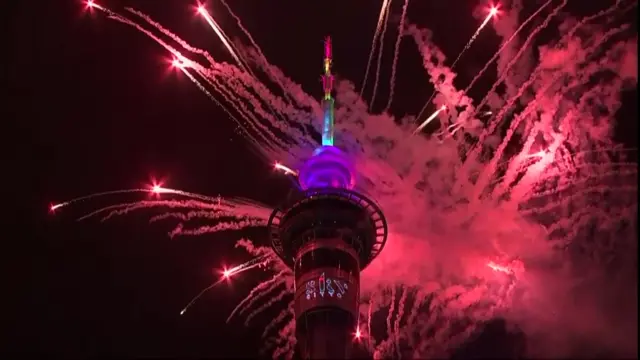
New Zealand and other Pacific countries joined Kiribati in welcome 2026 as a wave of midnight moments spread around the world, drawing attention back to celebrations and fireworks in cities throughout the globe.
Yet for residents of the West Coast of North America, midnight carried its own resonance. In Los Angeles beaches turned into impromptu dance floors as crowds embraced the new year with music and laughter, photographers captured bursts of colour over water and young families shared quiet reflections on personal hopes amid the bright spectacle.
In San Francisco, the iconic Bay lights cast luminous reflections across the water as residents applauded and embraced at the moment when January 1 arrived on the Pacific Coast. In Vancouver, waterfront promenades brimmed with families, all ages gathered to witness the dramatic transition across dates and clocks.
Seattle’s waterfront hosted live music and impromptu street performances, where artists and residents shared warm greetings and exchanged stories of the year now past.
The palpable energy extended well beyond the strike of midnight, as local restaurants and venues remained open into the early morning hours, enhancing the communal sense of optimism and collective renewal.
While such scenes unfolded in North America with the turning of local clocks, not all Pacific islands had yet reached midnight. Time zones near the International Date Line vary in placement, leaving regions such as American Samoa in the UTC −11 zone still awaiting the arrival of January 1.
Although uninhabited islands such as Baker and Howland mark the final reaches of global time at UTC −12, American Samoa stands out as one of the last populated places on Earth scheduled to enter the new year.
A Global Wave of Time and Celebration
The progression of New Year celebrations around the globe both unites humanity in a shared ritual and highlights the diversity inherent in global geography and culture.
The Earth’s rotation and its division into time zones ensure that January 1 arrives at different hours around the world, producing a layered sequence of celebrations rather than a single instant shared by all.
On one side of the Pacific Ocean, the dawn in Kiribati brought the earliest entry into 2026, and on the far side of the clock, American Samoa and other late time zone regions awaited midnight at least 24 hours later.
In Kiribati, community activities and traditional gatherings welcomed the sunrise of January 1, with many residents participating in church services, local feasts and cultural gatherings that honoured both past and future.
The central Pacific nation’s geographical positioning provides an early threshold into each new year, and its celebrations set the tone for what would become a global cascade of festivities.
The sun’s movement westward carries this energy across oceans and continents, shaping distinct local experiences of the same calendar moment but at times separated by hours of Earth’s rotation.
While North America entered 2026, thousands reflected on the year just past and considered their hopes ahead. Leaders in various cities offered speeches encouraging unity, resilience and community spirit, often emphasising themes of mutual understanding and collaboration.
In Vancouver, early evening celebrations near waterfront parks featured live music and family‑oriented events that continued into the new day. Street musicians, local dancers and spontaneous gatherings added to an atmosphere of inclusive joy that stretched from early night through midnight and beyond.
These celebrations arose even as other regions waited their own moment. In American Samoa, residents were poised for their midnight countdown well after most of the world had already begun its New Year, illustrating the way that global geography shapes human perception of time and communal experience.
With these communities, the anticipation of midnight soon will give way to their own gatherings, cultural traditions and heartfelt greetings. Though they may be among the final populated places on Earth to say goodbye to 2025, the sentiment of renewal and reflection will mirror that seen on the West Coast of North America.
The extended timeline of New Year observance also underscores the shared nature of time and celebration. Crowds on Vancouver’s streets listened to the last echoes of fireworks as the echo of midnight in the Eastern Hemisphere gave way to lively cheer on the Pacific Coast.
The spatial journey of New Year celebrations links distant points on the globe in a sequence that is both linear in hours and circular in cultural resonance. In each location whether it be Kiribati, Seattle, Los Angeles or eventually American Samoa communities found their own expression of collective hope, ritual and tradition. The experience of celebrating amid a global sequence of time zones reinforces a shared human connection while honouring distinct experiences.
From the earliest islands to the latest inhabited zones, the arrival of 2026 reflects not a singular moment but a constellation of moments guided by Earth’s rotation and enriched through cultural expression. Across continents and oceans, the wave of New Year celebrations unites people in a tapestry of time and space that stretches from sunrise in Kiribati to the last midnight near the International Date Line.
In the hours to come, islands still to welcome January 1 will bring their own rituals and festivities. Though separated by longitude, their experiences remain part of the broader global narrative of welcoming a new year.
Whether beneath fireworks over North American waters or under stars on Pacific atolls waiting for sunrise, the progression into 2026 is a reminder that human experience, though framed by clocks and calendars, ultimately extends beyond singular moments into enduring shared memory.

AD: Heritage And Restaurant Lounge Bar