
By Theodore Brown-
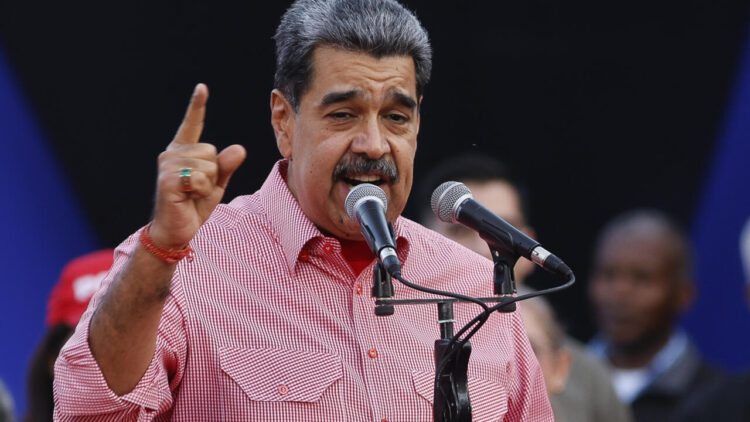
Venezuela’s President Nicolás Maduro has publicly signalled that his government is willing to engage in talks with the United States on combatting drug trafficking, opening a potential diplomatic channel amid heightened tensions and an aggressive campaign by Washington targeting narcotics networks in the Caribbean and Latin America.

AD: Capeesh Restaurant
The interview, conducted with Spanish journalist Ignacio Ramonet and broadcast on state television, carried both an olive branch and a pointed critique of US policy. Maduro insisted that Venezuela stands ready to negotiate “seriously” if Washington presents data and engagement in good faith.
At the same time, he argued that months of US pressure and military deployments near Venezuelan waters have undermined trust and exacerbated diplomatic friction between the two nations.
Maduro also framed Washington’s recent actions including military strikes and forceful rhetoric as efforts to destabilise his government and secure access to Venezuela’s significant oil reserves.

AD: Oysterian Sea Food Restaurant And Bar
Despite expressing an openness to dialogue on drugs and co-operation on energy matters, Maduro was notably reticent when asked about a reported CIA drone strike inside Venezuelan territory that the Trump administration described as directed against infrastructure believed to be used by drug traffickers.
While he avoided confirming or denying whether such an operation took place, he hinted that the topic could be discussed in the near future, adding a layer of ambiguity around a confrontation that could further complicate diplomatic overtures.
Maduro’s remarks emphasised that Caracas views drug trafficking as a shared global challenge that should be approached collaboratively rather than through unilateral military interventions or intense pressure campaigns.
The president reiterated that negotiations would be welcomed if framed around practical discussion and mutual respect, pointing to Venezuela’s long-standing ties with international partners and its own internal efforts to suppress criminal networks.
Featured in the broader context of these comments is the fact that the Trump administration has escalated pressurising measures in recent months, including naval deployments and the maritime interdiction of suspected smuggling vessels.
Washington has portrayed these operations as necessary efforts to protect US borders and stem the flow of illegal narcotics, a narrative that has resonated domestically among those concerned with drug overdoses and cartel influence.
However, critics argue that military intervention and aggressive tactics risk inflaming geopolitical tensions while offering limited effectiveness against deeply entrenched trafficking networks.
Maduro’s outreach comes amid a complex diplomatic backdrop in which Caracas and Washington have clashed over ideology, oil resources and regional influence for years.
Recent statements from Venezuelan officials portray the longstanding dispute as part of broader US intentions to exert control over Venezuelan assets and political direction views deeply ingrained in Caracas’s portrayal of its bilateral relations with Washington.
In the interview, Maduro reiterated that imperialism and intimidation have shaped recent US posture, yet he suggested that genuine negotiation is still possible if US representatives are willing to engage without coercive tactics.
Diplomatic Overtures Amid Rising Pressure
The current environment of US-Venezuela relations reflects a striking interplay between conflict and cautious diplomacy. On one side are military actions and strategic pressure, including repeated strikes against vessels suspected of trafficking and widened naval presence in the region.
On the other side are official talks of negotiation and shared responsibility to tackle transnational criminal activity. The juxtaposition captures the inherent tension between tough enforcement measures and the pursuit of diplomatic avenues to solve issues that affect both sides of the hemisphere.
Drug trafficking remains a potent issue stretching across borders and jurisdictions. In Latin America, the presence of organised crime networks has prompted coordinated responses among various national governments, including arrests, asset seizures and enforcement cooperation.
However, the role of state actors, alleged complicity and the scale of criminal operations have often complicated multinational efforts.
Venezuela’s leadership has consistently denied official participation in trafficking activities at major scale, even while particular cartel groups operating within or near its borders attract attention from international enforcement agencies.
Within the United States, policymakers and commentators have debated the best approach to reduce the supply of illicit substances while protecting national security and respecting international law.
Some argue that greater cooperation with neighbouring nations would enhance collective capacity to disrupt trafficking corridors, while others emphasise unilateral action and enforcement as necessary in the face of persistent criminal enterprise.
Maduro’s statement of openness to dialogue has sparked varied reactions in policy circles, with some viewing it as an opportunity to stabilise relations and reduce narcotics flows, while others question the sincerity of his commitment given the broader political context.
Another dimension of the evolving situation is the role of oil and economic interests. Venezuela, holding some of the largest proven oil reserves in the world, has for years balanced its petroleum ties amid sanctions and fluctuating global markets.
Maduro’s comments linking oil investment opportunities including potential involvement of US companies such as Chevron to cooperative efforts suggest a willingness to entwine energy diplomacy with negotiations on security issues.
Such linkages add complexity to discussions, as oil markets and energy geopolitics remain central to both Venezuelan economic strategy and broader global supply considerations.
Despite the assertions of readiness to negotiate, Maduro also maintained a critical posture toward US motives, insisting that genuine co-operation would require the lifting of what he describes as hostile measures aimed at regime change and economic pressure.
The balance between confrontation and negotiation encapsulates the broader uncertainty surrounding the future of US-Venezuela relations, particularly as both nations grapple with domestic pressures and international expectations.
Analysts note that while Maduro’s comments open a door to dialogue on shared concerns, real progress will depend on tangible steps from both sides to build trust, define common objectives and create a framework that is acceptable and transparent to broader audiences in the region.
Past attempts at negotiation on security matters and migration have yielded mixed results, often stalling in political disputes or external obstacles that undermined continuity. Thus, any talks on drug trafficking would need to address not only enforcement strategies but also diplomatic principles and respect for national sovereignty.
At the heart of these developments is a question of how neighbours with a history of tension and mutual distrust can navigate shared challenges that affect public health, transnational crime and geopolitical stability. Maduro’s statements reflect the dual reality of potential cooperation alongside enduring friction.
Whether these comments lead to substantive dialogue and policy outcomes remains a subject of international attention in the early months of 2026, with observers on both sides watching closely as rhetoric transitions into possible negotiation on one of the most pressing issues confronting the Western Hemisphere.

AD: Heritage And Restaurant Lounge Bar