
By Aaron Miller-
The documentary The Age of Disclosure, directed by Dan Farah, has become a bona fide streaming phenomenon, reportedly shattering records for documentaries on platforms like Prime Video and generating massive global buzz.
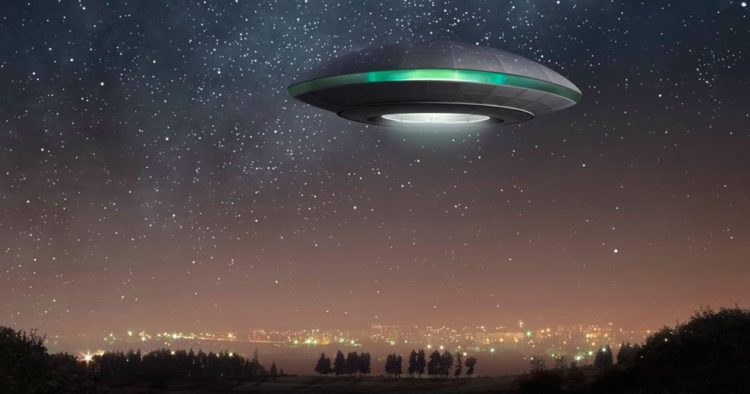
Released for a limited theatrical run and on video-on-demand (VOD) in November 2025, the film capitalizes on a surge of mainstream, bipartisan interest in Unidentified Anomalous Phenomena (UAP), the official term for what were once called UFOs.

AD: Capeesh Restaurant
Its unprecedented success can be attributed to a confluence of factors, including the highly credible nature of its on-camera sources—exclusively high-ranking government and military officials—expert timing amid ongoing congressional activity, an atmosphere of intense secrecy during production, and the sheer gravity of its claims concerning an alleged 80-year government cover-up of non-human intelligence.
The success of The Age of Disclosure has been swift and commercially significant, defying typical expectations for an independent, non-fiction film. The film did not just perform well for a niche topic; it competed with and surpassed major studio releases.
Reports indicate that The Age of Disclosure immediately claimed the top spot on major streaming services. It “broke the streaming service’s record for highest-grossing documentary” shortly after its release on November 21, 2025, on Amazon Prime Video. It maintained the #1 position for eight consecutive days, a notable achievement that saw it outperform major blockbuster movies available on the same platform.

AD: Oysterian Sea Food Restaurant And Bar
This performance solidified its status as a “VOD phenomenon,” demonstrating an exceptional public appetite for the subject matter when presented in a credible format.
The anticipation for the documentary was massive even before its main release. The initial trailer garnered over 22 million cross-platform views, which was cited as a record for a documentary trailer. The global reach of these views—with half originating from international audiences—highlighted a universal curiosity about the topic of extra-terrestrial life and government knowledge.
The trailer alone generated significant buzz and scepticism at the film’s SXSW premiere in March 2025, laying the groundwork for its later commercial success.
While not a traditional “record,” the documentary achieved an extraordinary level of mainstream media coverage and discussion for a UFO-related project.
Major news outlets like The New York Times, The Guardian, Variety, and Fox News all covered the film extensively, reviewing its claims and interviewing the director. The film was even screened for a bipartisan group of Members of the House of Representatives, demonstrating its impact in high-level political circles and its ability to bridge the gap between niche conspiracy theories and serious policy discussions.
The documentary’s record-breaking performance is not accidental. It is the result of a meticulously planned production strategy that leveraged credibility, timely cultural relevance, and an effective presentation of extraordinary claims.
The single most important factor contributing to the film’s success is the nature of its interview subjects. Director Dan Farah made the deliberate choice to only include on-record interviews with current and former senior U.S. government, military, and intelligence community members who had direct, personal knowledge of UAPs.
The final film features 34 such individuals. These are not “some guy with an opinion or a theory”; they are highly credentialed professionals, including.
Luis Elizondo, the former director of the Pentagon’s Advanced Aerospace Threat Identification Program (AATIP). Jay Stratton, the former director of the Pentagon’s UAP Task Force.
High-ranking politicians like Senator Kirsten Gillibrand (D-NY) and Secretary of State Marco Rubio (R-FL).
This “strength in numbers” approach provided a unique opportunity for interviewees to speak openly without feeling isolated or easily dismissed. The collective weight of their testimony largely dispelled the decades-long stigma associated with the topic.
When a former UAP Task Force director claims to have seen “non-human craft and non-human beings” with his own eyes, it is difficult for mainstream media and the public to simply label it a conspiracy theory. The film successfully framed the issue not as a question of belief, but as a matter of fact supported by credible witnesses.
The Age of Disclosure arrived at a moment of peak public and governmental interest in UAPs. Over the past few years, congressional hearings have been held, legislation like the bipartisan UAP Disclosure Act of 2023 has been pursued, and the Pentagon has released verified UAP footage.
The documentary perfectly capitalized on this shifting landscape. By including high-profile politicians from both sides of the aisle, it presented UAP disclosure as a non-partisan issue of national security and government transparency.
This bipartisan support helped the film gain traction in diverse media and political arenas that might have previously ignored such a topic. The film resonated with a public demanding answers from a government accused of an “80-year cover-up” and “the most successful disinformation campaign in the history of the US government.”
Strategic Production and Distribution
The making of the film itself was part of its allure. Farah spent three years developing the project in “strict secrecy” before its SXSW world premiere. This clandestine production process added an air of mystery and authenticity, suggesting that the information gathered was sensitive and groundbreaking.
The strategic rollout—premiering at a major film festival, securing limited Oscar-qualifying theatrical runs, and then immediately releasing on a massive global VOD platform like Prime Video—ensured maximum exposure across different market segments.
The accessibility on Prime Video allowed “everyone in the world” to watch it easily, facilitating its rapid viral success.
Ultimately, the content of the documentary provided the compelling narrative needed to sustain the buzz. The film moved beyond simply confirming UAP sightings and ventured into bolder territory, alleging:
The military has allegedly been in direct contact with beings found inside recovered craft.
A secret, high-stakes “Cold War race” is ongoing with nations like China and Russia to reverse-engineer this non-human technology.
These extraordinary assertions, while criticized by some sceptics for lacking verifiable evidence in the film itself, captured the public imagination. The documentary positioned these claims within the context of national security, making them feel urgent and serious rather than fantastical. The use of an orchestral score also added emotional weight and humanity to the testimonies, helping to open the minds of a sceptical audience.
The Age of Disclosure did not just break records; it signaled a paradigm shift in how the public consumes and discusses the topic of UAPs. By utilizing a powerful roster of highly credible government and military insiders, timing its release with peak congressional activity, and making bold claims about a vast cover-up and recovered alien technology, the documentary became a cultural phenomenon.
Its record-breaking streaming performance on Prime Video and immense trailer viewership confirm that a significant portion of the global population is ready for what the film’s title promises: a new era of transparency regarding humanity’s biggest secret.
The film has undoubtedly contributed to ongoing conversations and pressure on governments to release more information.

AD: Heritage And Restaurant Lounge Bar