
By Charlotte Webster-
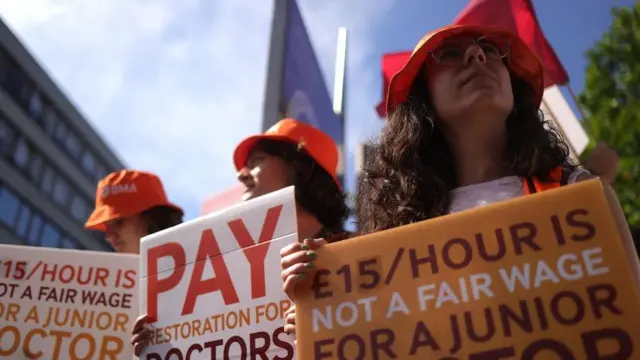
Doctors across England returned to their hospital posts on Monday morning following a five-day industrial action that plunged parts of the National Health Service (NHS) into one of its most challenging periods of the winter season.
The walkout by resident doctors the cohort formally known as junior doctors ended at 7 a.m. after lingering disputes over pay, training opportunities and workforce conditions. Hospitals immediately began efforts to recover from weeks of disruption, with health leaders warning that the aftershocks of the stoppage could be felt well into the new year.

AD: Capeesh Restaurant
The strike, which ran from 17 to 22 December, came against the backdrop of a severe surge in seasonal influenza cases and mounting pressure on emergency departments throughout England.
As doctors resumed work, political and medical leaders alike reiterated commitments to negotiation in 2026, emphasising their intent to avert future walkouts while addressing the systemic issues that brought staff to the picket lines.
The impact of the five-day strike was significant, forcing hospitals to cancel and reschedule routine appointments, delay elective procedures and reallocate remaining staff to safeguard emergency care. NHS providers worked around the clock to ensure that urgent and life-saving services were maintained, but many non-urgent appointments were postponed or ran late.

AD: Oysterian Sea Food Restaurant And Bar
This disruption compounded the pressure on trusts already contending with record levels of flu patients in beds. Officials noted that the number of people hospitalised with influenza remained at an unusually high level for this time of year, stretching resources that were already under strain.
Sir Keir Starmer, the Prime Minister, and Wes Streeting, the Health Secretary, both sought to strike a balance between acknowledging the strain on the health service and underscoring the need for sustainable long-term solutions.
Streeting pledged to resume formal talks with the British Medical Association (BMA) early in the new year, calling for a more collaborative approach to settle key issues around recruitment, training and remuneration. His objective is to prevent a continuation of this cycle of industrial action, especially during peak demand seasons that test the resilience of the NHS.
From the government’s perspective, the strike highlighted wider challenges: how to honour commitments to NHS staff while safeguarding public finances and maintaining service delivery.
Streeting noted that the BMA’s demand for an additional 26 per cent pay increase beyond previously agreed rises was not affordable under current fiscal constraints, but he insisted dialogue must remain open to bridge differences.
Doctors’ unions welcomed the renewed willingness to negotiate, saying that a can-do spirit must underpin discussions if a durable agreement is to be reached.
The BMA’s resident doctors committee emphasised the need for a multi-year strategy that would not only address the immediate pay dispute but also fundamentally improve progression opportunities and working conditions for trainees. They argue that without this, retention issues and staffing shortfalls will continue to undermine patient care.
Dispute, Demand and Patient Care
Many hospitals reported that even routine operations and outpatient clinics saw cancellations or delays during the strike. The NHS Confederation, which represents health service leaders nationally, warned that treating the post-strike backlog would be one of the most pressing tasks heading into 2026.
This challenge is intensified by the fact that the industrial action coincided with one of the busiest periods of the year for health services. While emergency departments remained open and operational throughout the walkout, the redistribution of staff and the prioritisation of urgent cases inevitably slowed progress on long waiting lists that had already ballooned in recent years.
The BMA and government remain at odds over the root causes of the dispute. Doctors have long voiced concerns about real-terms reductions in pay over decades, arguing that recruitment and retention are jeopardised when wages fail to keep pace with inflation and the cost of living.
Training opportunities and job security have also been focal points in negotiations, with medics saying that unmet workforce needs contribute to burnout and workforce attrition.
Public response to the strike was mixed. Many patients expressed frustration over cancelled appointments and routine care delays, while others conveyed sympathy for doctors who contend with long hours, rising workloads and morale challenges.
A number of clinical leaders highlighted that industrial action is rarely the preferred route for healthcare professionals, but it often emerges from prolonged periods of perceived neglect and stalled negotiations.
Health advocates have also pointed out that the strain on the NHS is multi-faceted. Beyond winter pressures such as flu and respiratory illnesses, hospitals face demographic shifts that increase demand for services, alongside resource constraints that complicate staffing and service expansion.
Campaigners on both sides of the dispute have called for a broader national conversation about health workforce planning and investment, suggesting that piecemeal negotiations may not be sufficient to address systemic weaknesses.
Local NHS trusts are now focused on restoring normal operations and catching up with backlogs. Clinicians emphasise the importance of maintaining high levels of vigilance for patient safety while rescheduling postponed care.
Trust managers have noted that the recovery process will require not just logistical coordination but also additional support for staff who worked extended hours to compensate for colleagues on strike.
The political implications of the strike remain significant. Government leaders have underscored their resolve to balance fiscal responsibility with fair compensation for NHS staff, insisting that long-term solutions are preferable to short-term fixes.
Opposition figures and union representatives argue that without more substantial commitments, future disputes are inevitable and could erode public trust further.
As resident doctors settled back into their duties this week, both sides acknowledged that dialogue is the only sustainable route forward. Negotiators tentatively scheduled meetings in the new year, hoping to avoid further stoppages that could coincide with other peak periods for health services.
The atmosphere around these discussions was cautiously optimistic, with patient advocates calling on all parties to prioritise solutions that strengthen the NHS workforce and protect care quality.
One of the longest labour conflicts in recent NHS history has come to a close with the end of the five-day strike. Both patients and providers get instant comfort from its resolution, even if it is just brief.
With the future course of NHS workforce relations and the experiences of patients and clinicians for years to come may be determined by how the government and the BMA decide to resolve their differences in the coming months.

AD: Heritage And Restaurant Lounge Bar