
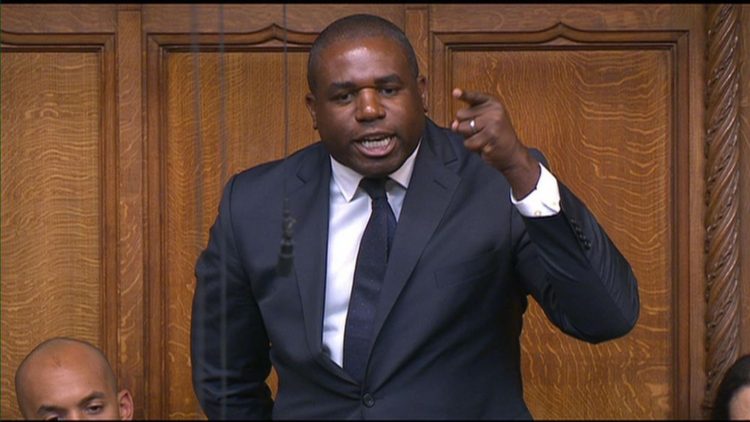
By Ben Kerrigan-
UK Deputy Prime Minister David Lammy(pictured) has recently suggested that rejoining the EU customs union could boost the UK’s economic growth, stating that Brexit “badly damaged” the economy. However, he also maintains that joining the customs union is not currently the official Labour government policy, a position affirmed by Prime Minister Keir Starmer’s office.
However, insiders are convinced that the Justice Secretary, who currently is under attack for the sorry state of prisons in the Uk and his recommendations to scrap jury trials for criminal offences carrying up to three year imprisonment, is on a mission to reverse Brexit, despite not formally stating so. Brexit was put into force when Britain voted to leave the European Union following a 2016 national referendum, , but the various complaints about the effects of Brexit by economics and members of the ;Labour party, has led many to believe this is on the agenda.
In a December 2025 interview, David Lammy, who is also the Foreign Secretary, stated that leaving the European Union “badly damaged our economy” and created “serious friction”. While noting that rejoining the customs union is “not currently our policy” and “not currently where we are,” he highlighted countries like Turkey that seem to be benefiting and experiencing growth through their customs union arrangement. Lammy’s remarks have led to speculation that some in the Labour government favour closer EU ties, although he emphasized that his comments are subject to “collective responsibility” and therefore must align with the Prime Minister’s official position.

AD: Capeesh Restaurant
Mr Lammy refused seven times in an interview to rule out reversing Brexit, arguing that leaving the EU badly damaged the UK economy and saying Labour should consider closer integration with Brussels. However, Mr Lammy said that rejoining the customs union was not currently government policy, but that it was self-evident that other countries had seen growth after doing so.
The focus is on “rebuilding our relations with the European Union” to reduce costs for businesses and improving the existing Trade and Cooperation Agreement rather than fundamentally renegotiating the UK’s trade position. The government aims for frictionless trade through practical measures like a veterinary deal and mutual recognition of professional qualifications, but outside of a customs union framework. “It’s why every single day that I was foreign secretary, I returned to the subject of our relationship with the European Union,” he said.
Health secretary Wes Streeting said on Wednesday that Labour should undo “the economic damage done by Brexit”.

AD: Oysterian Sea Food Restaurant And Bar
Baroness Shafik, the PM’s chief economics adviser, has also called for closer EU ties in the run up to the Budget.
Chancellor Rachel Reeves said back in October: “Things like austerity, the cuts to capital spending and Brexit have had a bigger impact on our economy than even was projected back then.
“That’s why we are unashamedly rebuilding our relations with the European Union to reduce some of those costs that were, in my view, needlessly added to businesses since 2016 and since we formally left a few years ago.”
Lammy’s comments are part of a broader effort within the Labour paty to address the negative economic impact of Brexit. Keir Starmer has also criticised the previous government’s botched implementations of Brexit which he stated ”significantly hurt our economy”. The Liberal Democrts have urged the government to negotiate a customs union, while some critics from the opposition accuse Labour of attempting to reverse Brexit indirectly. This situation highlight a point of discussion within the government regarding closer ties with The EU, despite the official policy remaining against joining the customs union.
Rejoining the EU Customs Union would require the UK to adopt the EU’s common external tariff and abandon its independent trade policy, but would remove customs checks and tariffs on most goods traded with the EU. This would be a significant change from the current Brexit deal. Common External Tariff (CET): The UK would have to apply the same tariffs as EU members to all goods imported from non-EU countries. This means the UK would no longer be able to negotiate separate goods trade deals with other countries like the US or India on its own terms, as it would not have control over its goods tariffs.
It would also involve removal of Tariffs and Customs Checks: Trade in goods between the UK and the EU would become largely tariff-free and the need for most customs border checks and associated paperwork would be eliminated.
This would significantly reduce the “friction” and administrative burdens currently faced by UK businesses, especially SMEs.
While a customs union alone doesn’t automatically mean full single market access (which requires free movement of people and adherence to a wider range of EU rules), in practice, to achieve genuinely frictionless trade in goods without checks, the UK would likely need to align with many EU standards and regulations. Otherwise, goods would still need to be checked and certified to meet EU standards at the border.
The UK would have to accept EU laws and standards in relevant areas without having a vote or influence in how those rules are made, essentially becoming a “rule-taker”.
Financial Contribution: The UK would likely need to make a financial contribution to the EU budget for specific programs related to the customs union arrangement.
Negotiations: Rejoining would require the unanimous approval of all 27 EU member states and a formal negotiation process, likely taking years.
Effect on the Current Brexit Deal
Rejoining the EU Customs Union would require a fundamental rewriting of the current Trade and Co-operation Agreement (TCA).
It would reverse a core outcome of Brexit, which was the UK’s ability to pursue an independent trade policy. The current TCA allows the UK to set its own tariffs and negotiate its own trade deals.
Economists generally estimate that rejoining would provide a boost to the UK economy compared to the current arrangement, by reducing trade barriers with its largest trading partner. The current deal has been estimated to have a negative impact on the UK economy. Such a move is a subject of significant political debate within the UK. While some argue it is a pragmatic step to boost growth, others view it as a betrayal of the 2016 Leave vote and a reversal of Brexit. The current UK Labour government has publicly ruled out rejoining the customs union, though some senior figures have suggested it is an option for future consideration.

AD: Heritage And Restaurant Lounge Bar