

Collective ambition remains strong, yet it is increasingly balanced with concerns about wellbeing, connection and stability. 2026, it seems, is the year when mindsets pivot away from “more at any cost” toward deeper meaning, intentional action and resilience.
Global sentiment surveys show a complex emotional terrain across the world, at least in terms of expectations. A new Ipsos Predictions Survey finds that 71 percent of respondents across 30 countries expect the year ahead to be better than the last, even amid mixed views on economic prospects.
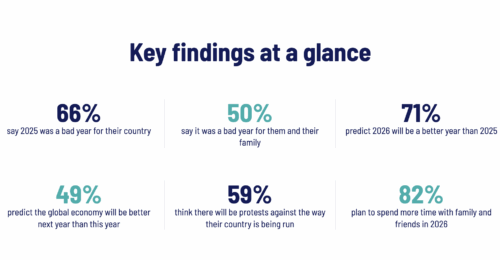 Figures show the percentage of respondents expecting 2026 to be better than 2025.

AD: Capeesh Restaurant
Almost half see the global economy improving, while a slim majority do not highlighting both hope and caution lingering in equal measure.
Almost half (48% on average globally) of respondents predict their country will be in recession in 2026, while one-third (33%) don’t think this is likely.
Meanwhile, people are split on whether their disposable income (what one can spend after paying bills for living expenses) will be higher in 2026 than it was in 2025; with almost half (47%) thinking this is likely and 43% disagreeing they’ll have more money to spend next year.

AD: Oysterian Sea Food Restaurant And Bar
Close to two in five (38%) think major stock markets around the world will crash in 2026, while 39% don’t think this is likely. The last time we asked this question in late 2021, a similar proportion (35% globally) thought there would be a major crash in the year ahead.
Two-thirds (67%) predict artificial intelligence (AI) will lead to many new jobs being lost in their country, up slightly from last year (64%). Two in five (43%) predict AI will lead to many new jobs being created, staying steady with last year (42%). Over the past year worry that AI will cost jobs rose in 21 of 30 countries.
Even as optimism persists, patterns of behaviour reflect a deeper trend. Recent consumer research shows that caution has become embedded in everyday decisions. According to a global report on consumer outlook, intentional consumption and cautious spending are expected to characterise behaviour through 2026, shaping attitudes around budgeting, purchases and long term planning.
Financial mindset is perhaps where change feels most tangible. In the United States, new survey results show that almost all people setting New Year resolutions for 2026 are including financial goals, especially saving money and gaining financial control.
Nearly one third expressed confidence that they can achieve those goals, and half feel somewhat confident a reflection of how financial wellbeing now intersects with emotional freedom and life satisfaction.
Across the United Kingdom, a separate survey suggests a more disciplined approach to discretionary spending, with many adults planning to cut back on takeaways, unused services and luxury purchases.
More than half expressed optimism about improving their finances in the year ahead, a sign that intentional budgeting may have broader cultural appeal. Expectations relating to financing do not always translate into reality, but there are many people capable of achieving just that.
This financial reframing ties into broader lifestyle choices. Reports on wellness and nervous system regulation highlight a desire to slow life down, reduce stress and cultivate practices that support emotional balance.
Breathwork, gentle movement and daily health routines are becoming mainstream tools, rather than fringe trends. Equally notable is the way people are rethinking technology use. Lifestyle research shows that many individuals are striking clearer boundaries with digital tools, choosing offline time and fostering deeper in-person connections.
Instead of reacting to constant notifications, people are making technology a conscious choice rather than an automatic reflex. Mental health and wellbeing are also shaping expectations among younger adults. A recent study on workplace culture finds that Gen Z employees prioritise mental health support, work life balance and inclusive environments, even more than rapid career progression.
Connection Culture and purpose in everyday life
In many communities, the pursuit of connection both local and global is influencing behaviour. The Ipsos survey shows that 82 percent plan to spend more time with family and friends in 2026, reflecting a desire to strengthen personal ties and carve out time for meaningful relationships.
Consumer culture and identity are also evolving. Reports on cultural trends describe people rediscovering traditions, creativity and authenticity amid fast moving digital landscapes.
Consumers are not only looking for value but seeking experiences and brands that resonate with personal identity and community belonging.
The way people think about success is also changing. Instead of focusing solely on productivity and status from work, many are incorporating personal values such as stability, rest, family time and self care into their definitions of achievement. With ambition its guided by purpose and sustainability is becoming more widespread.
Across cultures, there are signs that people are reclaiming their sense of agency. Younger generations have embraced trends that emphasise personal autonomy, deeper relationships, and mindful lifestyles, while older adults often bring perspectives of resilience, patience and measured reflection. The result is a social mix that values both growth and grounding.
Psychologists and cultural commentators suggest that the changes are not just short lived but rooted in a collective response to recent global stresses. After years of uncertainty around health, the environment, and economic stability, many individuals are moving toward intentional living, where choices are shaped by long term wellbeing rather than immediate gratification.
While this year will inevitably bring new challenges economic, political and technological the prevailing mood reflects a readiness to navigate complexity with thoughtfulness. People are aiming not just to adapt but to flourish in ways that strengthen both individual wellbeing and community resilience.

AD: Heritage And Restaurant Lounge Bar