

By James Simons-
Nearly eight years after the nerve-agent attack that targeted former Russian spy Sergei Skripal and his daughter in 2018, a newly published public inquiry has cast a harsh judgment on the event and raised urgent questions about whether British intelligence services have learned the right lessons.
The findings, released in December 2025, confirm that the 2018 attack was authorised at the highest level of the Russian state, prompting renewed scrutiny of how the UK defends itself against clandestine threats.

AD: Capeesh Restaurant
The episode which left bystanders seriously ill and claimed the life of a British citizen months later exposed significant vulnerabilities in intelligence coordination, public safety messaging and the capacity to manage chemical-weapons incidents on domestic soil.
With the publication of the inquiry report, British spies face a reckoning: have reforms truly addressed systemic failures, or have some vital warnings been missed?
What the Inquiry Revealed and Where Defences Fell Short

AD: Oysterian Sea Food Restaurant And Bar
The nerve-agent attack that poisoned Skripal and his daughter on 4 March 2018 in Salisbury has long been understood as a brazen demonstration of Russian state aggression.
The latest formal inquiry, chaired by former Supreme Court judge Anthony Hughes, concluded unequivocally that the operation was authorised by Vladimir Putin, and that operatives from the Russian military intelligence agency GRU were responsible.
The nerve agent, identified as the banned chemical weapon Novichok, had been smeared on Skripal’s front-door handle with minimal concern for collateral casualties.
During the aftermath, the UK’s scientific and emergency infrastructure led by the Defence Science and Technology Laboratory (Dstl) succeeded in identifying the nerve agent swiftly and coordinating medical treatment that saved the lives of Skripal, his daughter Yulia and a responding police officer.
More than a dozen contaminated sites were decontaminated and dozens of vehicles destroyed to safeguard the public. On this front, the scientific response stands as one of the largest of its kind in the UK since the Second World War.
However, the inquiry report did not pull punches on institutional failures. It identified glaring lapses in security planning, intelligence sharing, and public-health communication. The fact that Skripal a former GRU colonel convicted of spying for the UK was living openly under his own name in a quiet suburb without a secure identity, intensive surveillance or protective accommodation exposed a severe underestimation of the threat.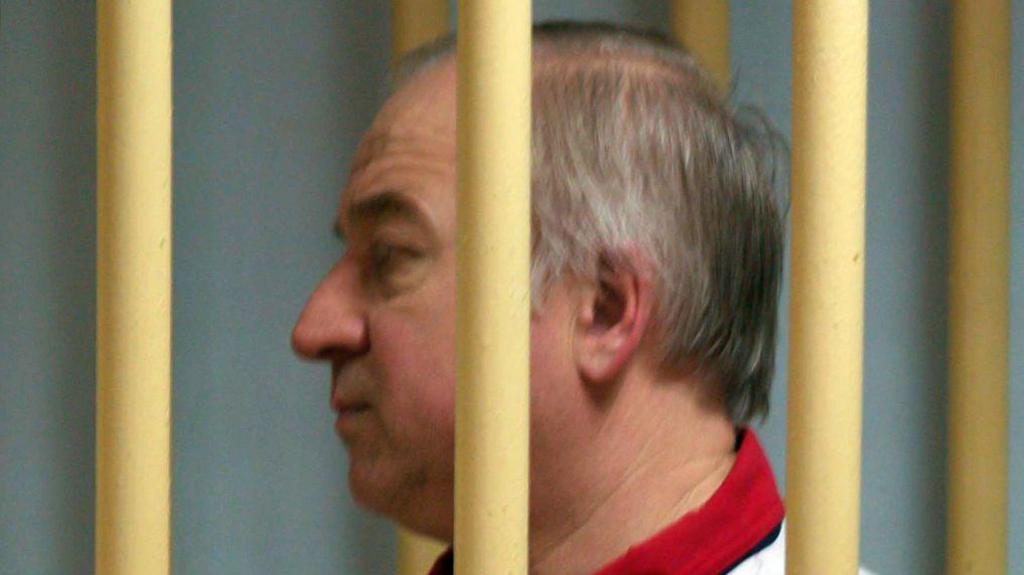
Sergei Skripal appears in a Moscow courtroom in 2006.
Further, months later, a discarded perfume bottle laced with Novichok was discovered in a bin, eventually found by a British woman, Dawn Sturgess. She sprayed herself with its contents and died a stark demonstration of how recklessly the GRU agents had disposed of a highly toxic weapon.
The inquiry concluded they had acted with “grotesque disregard for human life,” and held senior Russian state actors morally responsible for her death.
Crucially, the report criticises not just the attackers but the UK authorities for failing to anticipate or prepare for the full fallout. It found that public health warnings were inadequate, contaminated items were not traced quickly enough, and that initial responses mistakenly treated victims as drug users rather than contaminated by a chemical agent delaying effective medical and communication intervention.
That said, the inquiry acknowledged that at the time, intelligence agencies did not deem an assassination attempt on Skripal to be “probable enough” to require high-security protective measures. In effect, the risk-assessment system failed at a basic, strategic level.
Has British Intelligence Reformed or Just Claimed to?
In the wake of the inquiry’s damning findings, the British government imposed sweeping sanctions on the GRU, naming multiple agents linked to hostile foreign activity and summoning the Russian ambassador.
The response signals a political resolve to hold Moscow accountable but whether structural lessons have translated into operational reform remains open to question.
Scientific and emergency response systems have clearly been upgraded. The rapid identification of Novichok and the successful decontamination of sites in 2018 demonstrated the UK’s readiness to mobilise laboratories, medical services and environmental clean-up agencies.
This capacity appears now baked into national preparedness: chemical-, biological-, radiological- and nuclear- (CBRN) response protocols have been strengthened, training expanded and coordination improved. Programme leads at Dstl have described the incident as a wake-up call that reshaped how Britain handles domestic chemical-weapons threats.
Yet serious concerns remain about intelligence and risk assessment. The inquiry’s own conclusions show that even blatant targets like Skripal who had admitted knowledge of corrupt dealings involving high-level Russian officials were not afforded sufficient safeguards.
Analysts suggest the structural weakness lies not in frontline agencies but in how Britain defines “threat.” If intelligence thresholds require near-certainty of immediate danger before offering protection, then many potential targets remain exposed.
Critics argue that the UK has adopted a reactive mind-set rather than a preventive one. The fact that nearly eight years have passed and yet three alleged GRU agents remain in Russia, beyond the reach of British justice raises the question of whether espionage-related crimes are ever truly deterred.
Beyond chemical weapons, experts warn that the Kremlin’s “playbook” has evolved. Modern hostile activity is more likely to involve cyber-attacks, disinformation campaigns, drone strikes or sabotage than overt assassination attempts.
A recent commentary from the UK security establishment suggests that while Novichok-style incidents remain possible, the greater risk comes from hybrid tactics that exploit anonymity and plausible deniability.
Intelligence agencies must now balance two competing demands: deter hostile foreign action by demonstrating resolve, and remain alert to emerging asymmetric threats that do not broadcast themselves with nerve agents or perfume bottles.
Achieving that balance requires flexible thinking, robust inter-agency cooperation, and ongoing investment in both technical and human-intelligence capacities.
Whether the reforms born from the Skripal case will be enough remains uncertain. Some in the intelligence community argue the UK now possesses a stronger scientific and medical backbone to respond to chemical weapons. Others warn that the danger lies not in repeating 2018 but in failing to adapt to what comes next an attack that may never resemble anything that has come before.

AD: Heritage And Restaurant Lounge Bar