
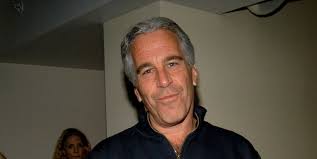
By Aaron Miller-
A federal judge has given the US Justice Department permission to release transcripts of a grand jury investigation into Jeffrey Epstein’s abuse of under-age girls in Florida – a case that ultimately ended without any federal charges being filed against the millionaire sex offender.
US District Judge Rodney Smith said a recently passed federal law ordering the release of records related to Epstein overrode the usual rules about grand jury secrecy.

AD: Capeesh Restaurant
The law signed in November by US President Donald Trump compels the Justice Department, FBI and federal prosecutors to release the vast troves of material they have amassed during investigations into Epstein that date back at least two decades. That release must take place this month. Friday’s court ruling dealt with the earliest known federal inquiry.
The Friday ruling approved the justice department’s request to unseal documents from the 2006-2007 federal grand jury investigation into Epstein in Florida. An earlier attempt to release these same transcripts was denied by a different judge earlier this year.
In 2005, police in Palm Beach, Florida, where Epstein had a mansion, began interviewing teenage girls who reported being hired to give the financier sexualised massages. The FBI later joined the investigation.

AD: Oysterian Sea Food Restaurant And Bar
Federal prosecutors in Florida prepared an indictment in 2007, but Epstein’s lawyers attacked the credibility of his accusers publicly while secretly negotiating a plea bargain that would let him avoid serious jail time.
In 2008, Epstein pleaded guilty to relatively minor state charges of soliciting prostitution from someone under age 18, serving most of his 18-month sentence in a work release programme that let him spend his days in his office. The US attorney in Miami at the time, Alex Acosta, agreed not to prosecute Epstein on federal charges – a decision that outraged Epstein’s accusers.
After the Miami Herald re-examined the unusual plea bargain in a series of stories in 2018, public outrage over Epstein’s light sentence led to Mr Acosta’s resignation as Mr Trump’s labour secretary.
A Justice Department report in 2020 found that Mr Acosta exercised poor judgment in handling the investigation, but it also said he did not engage in professional misconduct.
A different federal prosecutor, in New York, brought a sex trafficking indictment against Epstein in 2019, mirroring some of the same allegations involving under-age girls that had been the subject of the aborted investigation.
Other requests to unseal grand jury materials are underway in New York, where Epstein died in prison awaiting trial on sex trafficking charges 2019. Another judge is considering the release of grand jury documents in the case against Maxwell, who is serving a 20-year prison sentence after she was found guilty of recruiting and grooming young women and girls in connection with Epstein. Those requests are pending.
Lawyers for Maxwell have said that releasing grand jury files from her case could complicate her long-shot attempts to get a new trial.
“Releasing the grand jury materials from her case, which contain untested and unproven allegations, would create undue prejudice so severe that it would foreclose the possibility of a fair retrial” should she successfully win a retrial, they wrote.
Attorneys for Annie Farmer, who testified under oath that Maxwell groomed and assaulted her when she was a teenager, have also written to the judges overseeing the cases this week, warning that any denial of the motions to unseal the documents “may be used by others as a pretext or excuse for continuing to withhold crucial information concerning Epstein’s crimes.”
“Epstein’s victims have been denied justice for far too long by multiple government administrations of both parties,” they wrote. “Even now, the government has failed to investigate anyone other than Epstein himself and one of his accomplices, Ghislaine Maxwell, and there is no indication that the Department of Justice (or any of its offices) is taking action against other critical inner circle Epstein accomplices despite congressional investigations and public reporting concerning his sex trafficking ring’s financial infrastructure.”
Epstein’s confidant and ex-girlfriend, Ghislaine Maxwell, was tried on similar charges, convicted and sentenced in 2022 to 20 years in prison. Transcripts of the grand jury proceedings from the aborted federal case in Florida could shed more light on federal prosecutors’ decision not to go forward with it.
The Justice Department asked the court to unseal them so they could be released with other records required to be disclosed under the Epstein Files Transparency Act.
The Justice Department has not set a timetable for when it plans to start releasing information, but the law set a deadline of December 19.
The law also allows the Justice Department to withhold files that it says could jeopardise an active federal investigation. Files can also be withheld if they are found to be classified or if they pertain to national defence or foreign policy.
There are also speculations in some quarters that the full release of the files could produce information that leads to criminal charges against individuals caught up in the saga, for whom no criminal offences have been apparent. Several names have bene attached to the late paedophile, but only that of Andrew- now stripped of his royal titles- has come to pubic attention in relation to serious allegations. A full release of the files could prompt a second assessment for criminal charges.
A judge had previously declined to release the grand jury records, citing the usual rules about grand jury secrecy, but District Judge Smith said the new federal law allowed public disclosure.
The Justice Department has separate requests pending for the release of grand jury records related to the sex trafficking cases against Epstein and Maxwell in New York.

AD: Heritage And Restaurant Lounge Bar