
By Sammy Jones-
A 50-year-old woman from Brentwood has formally denied the charge of murdering her 19-year-old son, in a case that has sent shock waves through the local community and reopened painful questions about family tragedy and police investigation. The man, identified as 19-year-old Roman‑Vien Klimas, was found dead at a home in Norman Crescent after emergency calls raised concerns for his welfare, and the woman — his mother, Irene Webb — was arrested at the scene.
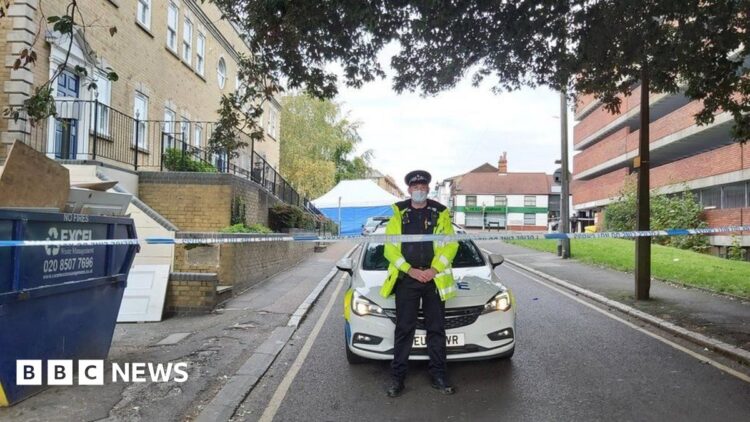
The discovery and subsequent arrest unfolded on Sunday evening, when local emergency services were dispatched following reports about a man’s welfare. Paramedics and police arrived at the property, but the young man was pronounced dead on scene. The police immediately detained a woman present at the address.

AD: Capeesh Restaurant
In the days following the incident, the woman was formally charged with murder. She appeared before Chelmsford Magistrates’ Court for a preliminary hearing on 22 October, remanded in custody pending a further hearing scheduled for 17 November at Chelmsford Crown Court.
The news has left the community in Brentwood reeling. Neighbours describe a heavy atmosphere of grief and disbelief — many struggling to reconcile the idea that a local family could be at the centre of such a tragedy. Local police have urged caution, asking residents and media to avoid speculation while detectives continue their work. “This remains a sensitive and ongoing investigation,” said a spokesperson, adding that the family is receiving support.
As the legal process advances, questions about motive, background, and sequence of events are high on public and media agendas. For now, the mother’s denial leaves open a painful uncertainty for the family, neighbours, and wider public alike.

AD: Oysterian Sea Food Restaurant And Bar
Authorities are focused on determining how and why Roman-Vien died
With the defendant denying murder, the spotlight has shifted onto investigative procedures: forensic tests, witness statements, and a full reconstruction of events that led to Roman-Vien’s death. The local police have confirmed that a full post-mortem was ordered, and toxicology results — along with any forensic data from the address — will play a critical role.
Legal experts say cases where a parent is accused of killing their own child are among the most complex and sensitive for investigators and the judiciary alike. Dr. Laura Finch — a criminal justice academic unaffiliated with the case — commented: “When suspected family violence results in death, the emotional stakes are high and public scrutiny intense.
It is essential for both justice and public confidence that every step — from autopsy to custody decisions — is meticulously handled.”
The potential timeline for this case depends largely on autopsy and forensic results, as well as any additional evidence such as CCTV, digital communications, or witness testimonies. Police say the process may take several weeks. Meanwhile, the family of the victim is being supported by specially trained liaison officers.
Authorities reiterated that the case appears confined to a single address and that there is currently no threat to the wider community.
Community response has been one of shock and sorrow. Local residents expressed difficulty coming to terms with the idea that a once-peaceful street could become the scene of a devastating family tragedy. One neighbour, speaking anonymously, said: “When you live somewhere like this you think things like that just don’t happen. I can’t believe it.”
Others spoke of concern, sadness, and a desire for truth to emerge quickly — for the sake of closure.
In parallel, social services and community organisations have offered support to others in the area who may be emotionally affected, recognising that events of this nature can have a ripple effect across neighbours, schools, and extended family networks. The aim is to prevent stigma, speculation, and undue public pressure while the legal process proceeds.
Meanwhile, campaigners and local voice-holders highlight how important it is for the justice system to remain transparent yet respectful of privacy in such cases. A standard legal principle, they emphasise, is that a defendant is presumed innocent until proven guilty — a presumption that remains central even in emotionally charged scenarios like this one.
The case raises concerns about family welfare and public transparency The drama unfolding in Norman Crescent has brought to light broader societal concerns about how tragedies within families are handled — legally, socially, and through media coverage. Cases involving murder charges against parents or guardians are always emotionally fraught, and they demand both sensitivity and rigorous fairness.
: What circumstances led to the death and whether s there outside support, or signs of distress hidden from view? Some ask whether social services or neighbours might have been in a position to notice danger — and if so, whether early intervention might have changed the outcome.
Local councillors and community leaders have called for improved support systems for families under stress. One councillor, speaking on condition of anonymity, told reporters: “We must ask whether tragedies like this are entirely unpredictable — or whether we need better welfare checks, mental health support, and community safety nets to prevent them.”
At the same time, the case underscores the importance of clear and responsible media reporting. Too often, headlines in such cases lean toward speculation or sensationalism — which can deepen pain for families and hamper the presumption of innocence. Observers say that journalists should prioritise factual reporting, avoid naming family members prematurely, and emphasise the provisional nature of early allegations.
The role of the police has also come into focus. Many residents express gratitude that officers responded quickly and treated the investigation with seriousness and discretion. Detective Inspector James Holmes, leading the investigation, urged residents to show restraint: “We are working with care and professionalism to uncover the truth.
We ask the public and media to refrain from speculative reporting, to respect the family’s privacy, and to let the evidence speak for itself.”
Yet for others, the case raises uncomfortable questions about whether more could have been done — by neighbours, services, or local institutions — before tragedy struck. It points to potential gaps in social support and community vigilance, especially where young adults live with family under potentially stressful conditions.
Whatever the outcome, the immediate need is clarity. For the family involved, for neighbours, and for the wider public looking for assurance that justice will be served fairly and transparently. As one local community figure told our reporter: “We want facts. We want fairness. And above all, we need the truth.”

AD: Heritage And Restaurant Lounge Bar