
By Chris Williamson-
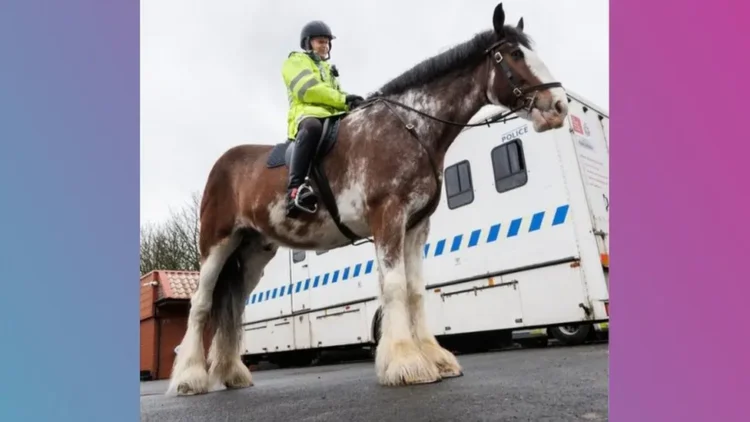
In what is a first for more than a quarter-century, police horses are once again patrolling city streets, drawing a mix of nostalgia, curiosity, and renewed optimism from residents and officers alike. The decision to revive the mounted unit follows years of discussion within the department and community about how best to build trust, improve crowd management, and reintroduce a sense of approachability often missing from modern policing.
The reestablishment of the mounted unit is more than a sentimental nod to the past. It signals a strategic shift in how the department hopes to engage with neighbourhoods while enhancing visibility and public safety. The horses—magnificent, towering animals with calm temperaments have become a welcome sight as they clip-clop through parks, commercial districts, and busy public squares.

AD: Capeesh Restaurant
The move comes at a time when departments nationwide are exploring ways to rebuild bonds with the communities they serve. Police leadership believes that the unique presence of a horse can break down barriers, encouraging interactions that might not happen from behind a steering wheel or tinted patrol car window.
The return of mounted policing, therefore, is grounded in a simple but powerful idea: when officers feel more accessible, residents feel more comfortable.
The horses selected for the revived unit arrived several months ago and underwent extensive training to prepare them for the sensory challenges of urban environments. Sirens, traffic, crowds, and unpredictable sounds are all part of their daily acclimation.

AD: Oysterian Sea Food Restaurant And Bar
Their handlers, many of whom are long-time officers volunteering for the assignment, have been equally dedicated, learning the nuances of equine communication, care, and control. Through this process, the two become a team—one that relies on trust, consistency, and an unspoken bond formed during long hours of training.
The city last had an operational mounted unit 26 years ago, disbanded during a period of budget cuts and shifting priorities. Those who remember it often describe the horses as symbols of balance: gentle yet authoritative, peaceful but unmistakably capable of commanding respect. As the new unit trots confidently forward, it appears poised to reclaim that legacy for a new generation.
Community reaction range from enthusiastic to curious . Residents have reacted warmly to the horses’ return, with many approaching officers in parks and downtown corridors to ask about the animals, praise their appearance, or simply pet their velvety noses. Families pause during weekend outings to take photos, and children stare wide-eyed as the horses pass, their hooves landing rhythmically on concrete.
Local shop owners have noticed a shift as well. Several have commented that the presence of mounted patrols brings a sense of calm to typically crowded areas. The horses are hard to ignore, and that visibility works as an effective deterrent to low-level disturbances.
The elevated vantage point of a mounted officer gives a sweeping view over large groups, allowing early identification of potential issues during events and festivals.
Despite the overwhelmingly positive response, some residents have raised questions about cost, animal welfare, and the necessity of mounted policing in a technologically advanced era. Department leadership has addressed these concerns by emphasizing the stringent care standards governing the horses’ daily routines.
The animals live in modern, well-ventilated stables, receive top-tier veterinary oversight, and enjoy regular rest periods with access to wide-open pasture space outside the city.
On the financial side, the department clarified that a combination of public funding, grants, and community partnerships helped support the unit’s reintroduction. Officials insist that the investment is justified by the wide range of benefits, from improved crowd control to positive community interactions that cannot be easily replicated by other methods.
The officers selected for the mounted unit have become informal ambassadors for the department. Their training includes not only equestrian skills but also community engagement techniques. They are encouraged to stop for conversations, answer questions, and create approachable points of connection during their patrols.
According to one officer, the horses often act as conversation starters, melting away the tension some residents feel when encountering law enforcement.
In many ways, the horses have already succeeded at reinvigorating public connection. An officer recalled a recent moment when an elderly resident approached with tears in her eyes, explaining that she had not seen a mounted patrol since her youth. She thanked the officer for bringing back something she believed had been lost forever.
These small, personal stories illustrate why the mounted unit’s revival resonates so strongly for many in the community.
Reinstating the mounted unit required more than the acquisition of horses. The department had to rebuild an entire infrastructure stables, training spaces, transport trailers, and specialized equipment—from the ground up. Officers underwent rigorous selection processes, and those chosen then committed to learning horsemanship skills that demand patience, discipline, and empathy.
Training a police horse involves a blend of desensitization exercises, physical conditioning, and steady exposure to urban challenges. Recruits learn to stay calm amid the blare of sirens, sudden crowd surges, and unpredictable movements. Their handlers learn to interpret subtle cues, adjusting their commands not with force but with gentle guidance. This relationship forms the bedrock of the mounted unit’s effectiveness.
Mounted patrols are often seen as relics of an earlier time, when cities were smaller and streets quieter. Yet, even in the modern era, their value endures. Horses remain uniquely effective in crowd settings because of their height and ability to navigate areas inaccessible to vehicles.
Their presence during parades, demonstrations, or large celebrations adds a layer of safety by allowing officers to observe situations from above and respond quickly.
Beyond practical advantages, there is an intangible element at play: tradition. Cities across the world maintain mounted units as symbols of stability and heritage. By reviving this tradition, the department acknowledges the deep cultural resonance that horses carry.
Their silhouettes against city skylines evoke stories of resilience and continuity, linking past and present in a way few elements of policing can.
As the program enters its first official months, the department plans to evaluate the horses’ impact through observation, community feedback, and officer reports. If the early response is any indication, the unit may expand in the coming years. Several officers already on waiting lists are eager to join, and additional horses could be brought in if the program continues to flourish.
The sight of a mounted patrol is still fresh, still surprising, still capable of stopping people in their tracks. Parents lift children onto their shoulders for a better view. Visitors pull out phones to capture the moment. Longtime residents smile, remembering a time when horses commonly patrolled the streets and feeling comforted by their return.
The reintegration of mounted policing reflects a shift toward approaches that emphasize presence over pressure, communication over confrontation. By reviving an old practice with modern purpose, the department hopes to blend visibility with approachability, deterrence with dignity, and tradition with contemporary needs.
As the sun sets on another patrol day, the horses retreat to their stables, where they are brushed down, fed, and allowed to rest. Their officers remove saddles with the same care they use to steady reins in crowded streets. It is clear that this partnership—26 years in the making has reignited something meaningful within the city.
The gentle rhythm of hoofbeats now echoes through corridors once absent of such sound, reminding everyone that sometimes the best way forward begins by bringing something valuable back.

AD: Heritage And Restaurant Lounge Bar